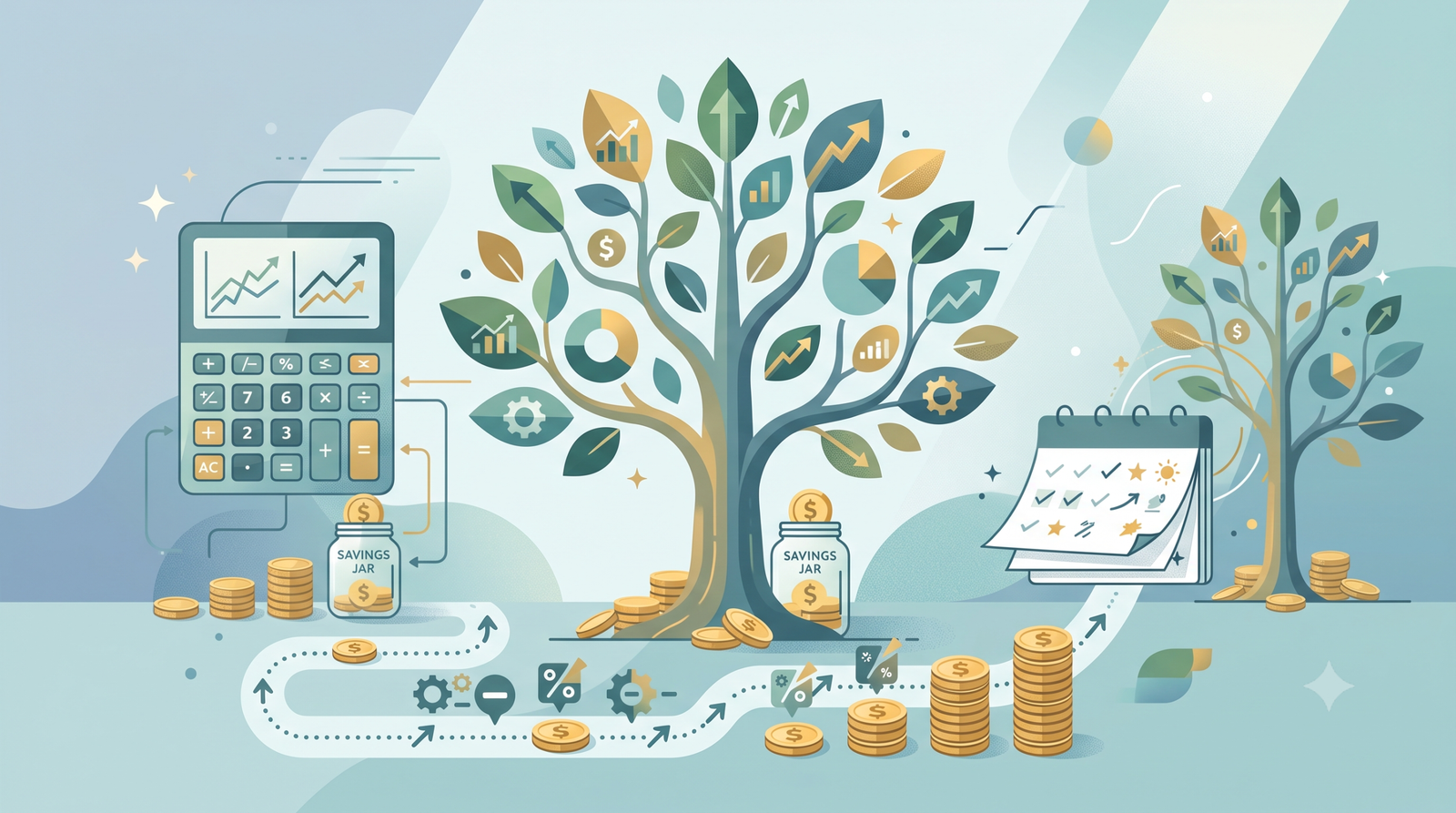
Retirement savings can seem confusing because the most important benefit does not usually happen immediately.
A small contribution may not appear to change your financial life. But when money remains invested and earns returns over a long period, those returns may begin earning returns of their own.
This process is commonly called compound growth.
Compound growth is one reason starting retirement savings early can be valuable, even when the initial contributions are small. Time allows more opportunities for contributions and investment growth to build on one another.
However, compound growth is not guaranteed. Investment values can fall, returns vary, fees reduce results, and retirement accounts have different rules depending on the country and plan.
This guide explains how compound growth works in retirement accounts, why starting early matters, how contributions and returns interact, what fees and withdrawals can do to growth, and why a simple long-term habit may be more powerful than trying to make one perfect investment decision.
This article is general education. Retirement rules, taxes, contribution limits, investment choices, and withdrawal penalties vary by country and account type.
What Is Compound Growth?
Compound growth occurs when your original contributions earn returns and those returns remain invested so they can potentially generate additional returns.
A simple example:
- You contribute $1,000.
- The account earns a return.
- The balance increases.
- The next return is calculated on the larger balance.
- Future growth may build on both the original contribution and previous growth.
This is different from earning a fixed amount only on your original deposit.
The process can apply to:
- Interest
- Dividends
- Capital growth
- Reinvested distributions
- Other investment returns
The account balance does not grow in a straight line. Some periods may produce gains, while others may produce losses.
Compound growth is a long-term concept, not a promise that every year will be positive.
Contributions and Growth Work Together
A retirement account may grow through two main sources:
Your Contributions
These are the deposits you make from income, savings, or an employer plan.
Contributions may be:
- Weekly
- Monthly
- Per paycheck
- Quarterly
- Occasional
Investment Growth
Money inside the account may be invested and change in value. Growth can come from price increases, dividends, interest, or distributions depending on the investment.
Your contributions create the foundation. Growth may become more significant as the balance and time period increase.
For example, early contributions have more time to experience changes in value. Later contributions may still be important, but they have fewer years available before retirement.
Why Starting Early Matters
Starting early can provide two advantages:
- More time for contributions
- More time for potential growth to build on itself
Consider two simplified savers.
Saver A
- Contributes $200 per month from age 25 to 35
- Stops contributing after age 35
- Leaves the money invested
Saver B
- Contributes $200 per month from age 35 to 65
- Continues contributing for thirty years
Saver B contributes much more money. However, Saver A’s earlier contributions receive more time to potentially grow.
The final result depends on returns, fees, taxes, account rules, and investment behavior. The example does not guarantee that the early saver will finish with more money.
The lesson is that time can be an important part of retirement planning. Waiting for the “perfect” time may cost years of potential compounding.
A Simple Compound Growth Example
Suppose you invest $200 per month for twenty years.
Your total contributions would be:
$200 × 12 months × 20 years = $48,000
If the account experiences positive growth over time, the final balance could be higher than the amount contributed. The difference would represent investment growth before considering fees, taxes, and other factors.
If you wait ten years and contribute $400 per month for the next ten years, your total contributions would also equal $48,000.
The two approaches contribute the same amount, but the first set of contributions has more time to potentially grow.
This is why early contributions can be powerful even when the monthly amount is modest.
The example is not a prediction. Actual investment returns are uncertain, and losses can occur.
Compound Growth Is Not the Same as Guaranteed Interest
People sometimes use “compound interest” and “compound growth” as though they mean exactly the same thing.
Compound interest usually describes interest added to an account balance, such as a savings deposit or fixed-interest product.
Compound growth is a broader term that may include:
- Interest
- Dividends
- Reinvested distributions
- Changes in investment value
Investments do not usually provide a guaranteed return. An account may grow over a long period while still experiencing declines along the way.
This distinction matters because retirement investing involves risk. A projection based on an assumed annual return is an estimate, not a promise.
The Role of Reinvesting Returns
Compound growth works more effectively when returns remain invested.
For example, if an investment pays a distribution and that distribution is removed from the account, it may not contribute to future growth inside the account.
If it is reinvested, it may purchase additional units or shares, which may later experience their own gains or losses.
Reinvestment rules depend on:
- Account type
- Investment
- Provider
- Tax rules
- Distribution policy
- Your instructions
Check how your retirement account handles dividends, interest, and distributions.
Do not assume that every payment is automatically reinvested.
Fees Reduce Compound Growth

Fees may appear small, but they are deducted repeatedly from the account.
Possible fees include:
- Account administration
- Investment management
- Trading
- Advisory services
- Fund expenses
- Transfer fees
- Withdrawal fees
- Plan charges
A fee reduces the money that remains invested. Over a long period, the lost amount may also reduce the growth that money could have generated.
Compare:
- Annual percentage fee
- Fixed account charge
- Total expense
- Services provided
- Available investment choices
- Employer plan costs
- Transfer conditions
The lowest fee is not automatically the best option if the account lacks suitable features. However, fees should be understood before choosing an account or investment.
Employer Contributions Can Add to Growth
Some employers contribute money to a workplace retirement account when employees contribute.
The exact structure varies. A plan may:
- Match a percentage of contributions
- Contribute a fixed amount
- Require a minimum employee contribution
- Apply vesting rules
- Limit eligible contributions
- Use different investment choices
Read the official plan documents to understand the terms.
An employer contribution may increase the amount invested without requiring an equal contribution from you. However, do not contribute beyond your ability to pay essential expenses or high-cost debt.
The value of a workplace plan depends on the full rules, fees, investment options, tax treatment, and your personal situation.
Read how employer matching works for a detailed explanation.
Inflation and Retirement Growth
Compound growth should be considered alongside inflation.
If retirement savings increase in account value but prices also rise, the future purchasing power of the money may be lower than the balance suggests.
This is why retirement planning should consider:
- Future living costs
- Healthcare
- Housing
- Taxes
- Lifestyle
- Longevity
- Inflation
- Income sources
- Investment risk
A projection showing a future balance is not the same as showing what that balance will buy.
You may need to review your contributions over time as your income and expenses change.
Avoid the Most Common Compounding Mistakes
Waiting Too Long to Start
A small contribution today may have more time than a larger contribution made much later.
Stopping During Every Market Decline
Selling or stopping contributions during fear may interrupt a long-term plan, but the appropriate response depends on your goals and risk.
Taking Excessive Risk
Seeking high returns can expose retirement savings to larger losses.
Ignoring Fees
Repeated fees reduce the money that remains invested.
Increasing Lifestyle Spending With Every Raise
If every raise goes toward higher spending, retirement contributions may never increase.
Read lifestyle creep and retirement savings for more on this behavior.
Forgetting Employer Contributions
Some workers fail to understand or use available workplace retirement benefits.
Using Retirement Money for Short-Term Expenses
Withdrawals may create taxes, penalties, fees, and lost future growth depending on the account and local rules.
A Practical Retirement Contribution Routine
Create a routine that is easy to maintain.
Start With a Realistic Amount
Choose a contribution that fits after essential expenses, emergency savings, and required debt payments.
Increase Gradually
When your income rises, consider increasing contributions before lifestyle costs absorb the entire raise.
Review the Account Periodically
Check:
- Contributions
- Employer contributions
- Fees
- Investment choices
- Account statements
- Beneficiaries
- Tax documents
- Retirement timeline
Keep Goals Visible
Your retirement account may not feel urgent because the benefit is far away. A written estimate of future needs can make the purpose more real.
Avoid Constant Changes
Reviewing periodically is useful. Changing investments after every market headline may reduce consistency and increase emotional decisions.
A Realistic Compound Growth Timeline
Suppose a person begins contributing $150 per month at age 25.
The contribution may feel small during the first year. The account balance will mostly reflect deposits, with growth varying over time.
After five years:
- Contributions become more visible
- The person has developed a regular habit
- The account has had more time to experience market movement
After ten or twenty years:
- The balance may include a larger amount of accumulated growth
- Contribution increases may have a greater effect
- Fees and investment choices become more significant
- The person may have more flexibility to adjust the plan
This is not a guarantee of a specific balance. It demonstrates why the habit and time horizon matter.
Frequently Asked Questions
How does compound growth work in a retirement account?
Contributions and investment returns remain in the account, allowing future returns to potentially build on the original contributions and previous growth.
Why does starting early matter for retirement?
Early contributions have more time to remain invested and potentially experience growth. Starting early may reduce the amount you need to contribute later, although returns are never guaranteed.
Is compound growth guaranteed?
No. Retirement investments can lose value, and returns vary. Compound growth is a long-term possibility, not a guaranteed result.
What is the difference between compound interest and compound growth?
Compound interest generally refers to interest earning additional interest. Compound growth is broader and may include interest, dividends, reinvested distributions, and investment value changes.
Do fees affect compound growth?
Yes. Fees reduce the money that remains invested, and the amount removed may also lose the opportunity to grow.
Should I increase retirement contributions after a raise?
You may consider increasing contributions if your budget allows. Review essential costs, debt, emergency savings, taxes, and employer-plan rules first.
What if I started saving late?
You still have options. Review your current savings, timeline, contributions, expenses, debt, and available employer benefits. Read how to catch up on retirement savings for a detailed guide.
Can I withdraw retirement savings early?
Rules vary by account and country. Withdrawals may involve taxes, penalties, fees, or lost future growth. Check the account terms before taking money out.
Key Takeaways
- Compound growth happens when contributions and returns remain invested and future growth builds on the larger balance.
- Starting early can give contributions more time to potentially grow.
- Compound growth is not guaranteed because investments can lose value.
- Regular contributions are one part of retirement growth; fees, inflation, taxes, and investment choices also matter.
- Reinvested distributions may contribute to future growth depending on the account and investment.
- Employer contributions can increase retirement savings, but plan rules should be reviewed carefully.
- Avoid using retirement savings for short-term expenses without understanding the consequences.
- Gradual contribution increases can help prevent lifestyle inflation.
- Readers can continue with why people underestimate retirement needs, how employer matching works, and catching up on retirement savings.
- Goal-based saving can also help organize retirement alongside other financial priorities.
Compound growth is powerful because it gives time a role in retirement planning. A small contribution may not seem impressive today, but repeated contributions can create a foundation that has many years to develop.
The process is not guaranteed and does not eliminate investment risk. It works best when combined with realistic contributions, understood fees, appropriate risk, regular reviews, and patience.
This article is for informational purposes only and is not retirement or investment advice.
Leave a Reply
You must be logged in to post a comment.