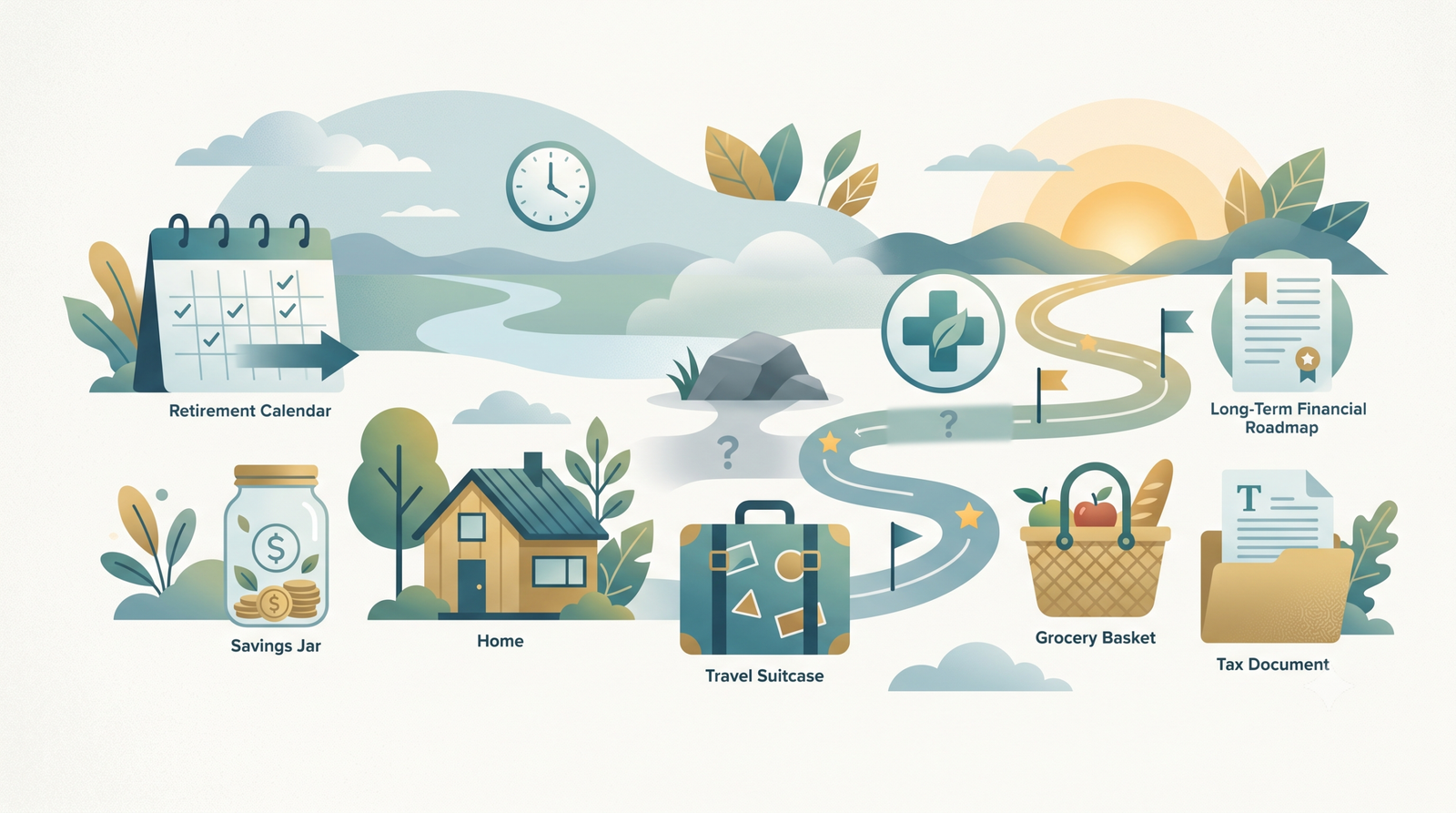
Retirement planning often begins with a simple question:
How much money will I need?
The difficult part is that the answer depends on expenses, healthcare, housing, inflation, taxes, longevity, lifestyle, and income sources that may change over several decades.
Many people underestimate retirement needs because they focus on one number, such as their current income or account balance, without considering how their spending and responsibilities may change.
You may spend less on commuting after retirement, but more on healthcare. You may pay off a mortgage, but need more money for travel, home maintenance, or family support. You may plan to stop working at one age but live much longer than expected.
This guide explains why people underestimate retirement needs, which expenses are commonly forgotten, how inflation and longevity affect planning, and how to create a more realistic estimate.
Retirement rules, public benefits, tax treatment, and account options vary by country. This article is general education, not personalized retirement advice.
Mistake 1: Assuming Retirement Costs the Same as Today
Your current spending may not match your future spending.
Some costs may decline:
- Commuting
- Work clothing
- Daily lunches
- Childcare
- Professional memberships
- Employment-related travel
Other costs may increase:
- Healthcare
- Home repairs
- Travel
- Hobbies
- Family support
- Insurance
- Long-term care
- Household assistance
Instead of applying one broad percentage to current income, list your actual spending categories.
Ask:
- Which expenses will disappear?
- Which will remain?
- Which may increase?
- Which new expenses could appear?
- What lifestyle do I want?
- How much flexibility should I have?
A personalized estimate may be more useful than assuming retirement automatically requires a fixed percentage of current income.
Mistake 2: Forgetting Inflation
A future retirement budget must account for rising prices.
If groceries, housing, healthcare, and services become more expensive, the same amount of money may buy less later.
For example, a monthly expense of $3,000 today may require more than $3,000 in the future to provide a similar lifestyle.
Inflation can affect:
- Food
- Utilities
- Rent
- Medical treatment
- Insurance
- Transportation
- Home maintenance
- Travel
- Personal services
Inflation may not affect every category at the same rate, so a general estimate is only a starting point.
Review retirement savings regularly and update assumptions rather than relying on a calculation made many years ago.
Mistake 3: Underestimating Healthcare Costs
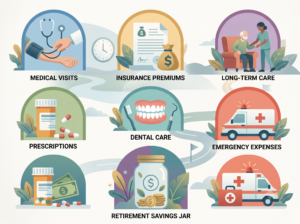
Healthcare is one of the most commonly overlooked retirement expenses.
Consider:
- Insurance premiums
- Deductibles
- Copayments
- Prescriptions
- Dental care
- Vision care
- Medical equipment
- Specialist visits
- Travel for treatment
- Long-term care
- Support services
Public healthcare or employer benefits may cover some costs, but coverage varies by country and situation.
Do not assume that all medical expenses will be fully covered. Review the programs available where you live and consider how out-of-pocket costs could affect your budget.
Healthcare planning is especially important because costs may increase while income becomes less flexible.
Mistake 4: Assuming the Mortgage Will Be Paid Off
Some people assume housing costs disappear after retirement.
A mortgage may be paid off, but other housing expenses can continue:
- Property taxes
- Insurance
- Maintenance
- Repairs
- Utilities
- Accessibility changes
- Home improvements
- Property association fees
- Rent, if you do not own the home
Renters may face future rent increases. Homeowners may need to replace roofs, heating systems, appliances, or plumbing.
Ask:
- Will I remain in this home?
- Could the home require modifications?
- What maintenance costs are likely?
- Would downsizing reduce or increase expenses?
- Will taxes and insurance continue?
- Do I need a home-repair sinking fund?
Housing can remain one of the largest retirement expenses even after a loan is repaid.
Mistake 5: Ignoring Longevity
People often plan for retirement as though it will last a fixed number of years.
But retirement may last:
- Ten years
- Twenty years
- Thirty years
- Longer than expected
The longer your retirement lasts, the more important it becomes to consider inflation, healthcare, investment risk, and income sustainability.
You do not need to predict your exact lifespan. Instead, plan for the possibility that your money may need to support you for a long time.
Longevity also affects couples differently. One partner may live many years after the other, creating changes in:
- Housing
- Income
- Healthcare
- Insurance
- Household support
- Taxes
- Daily expenses
A retirement plan should consider both joint and individual circumstances.
Mistake 6: Counting on One Income Source
Retirement income may come from several sources:
- Public benefits
- Workplace pensions
- Personal savings
- Retirement accounts
- Investments
- Rental income
- Business income
- Part-time work
- Annuity payments
- Family support
Do not assume that one source will cover every future expense.
Ask:
- Which income sources are guaranteed?
- Which depend on investment performance?
- Which can change?
- When will each begin?
- Are there taxes or fees?
- What happens if one partner dies?
- What happens if work ends earlier than expected?
A plan based on several income sources should account for the possibility that some may be smaller than expected.
Mistake 7: Underestimating Taxes and Fees
Retirement account withdrawals, pensions, investment income, property, and other sources may have different tax treatment.
Possible costs include:
- Income taxes
- Account fees
- Investment management fees
- Transaction costs
- Healthcare contributions
- Property taxes
- Insurance premiums
- Withdrawal penalties
The amount shown in an account is not always the amount available to spend.
Learn how your retirement accounts and income sources are treated under the rules that apply to you. Consider getting qualified tax or financial advice if your situation is complex.
Mistake 8: Assuming Retirement Spending Will Stay Constant
Retirement spending may change across different stages.
Early Retirement
You may spend more on:
- Travel
- Hobbies
- Dining out
- Visiting family
- Relocation
- Home projects
Middle Retirement
Spending may become more stable, with less travel or activity.
Later Retirement
Healthcare, support services, transportation, and assistance may become more important.
This pattern is not the same for every person. Some retirees travel later, while others have higher healthcare costs early.
A flexible plan can handle changing categories better than one fixed annual number.
Mistake 9: Ignoring Support for Family
Some retirees expect to help:
- Adult children
- Grandchildren
- Relatives
- A partner
- Friends
- Community members
Support may include:
- Housing
- Education
- Medical expenses
- Gifts
- Loans
- Childcare
- Emergency help
Generosity can be meaningful, but it should fit within your retirement resources.
Before promising support, ask:
- Can I afford this without reducing essential income?
- Is this a one-time gift or an ongoing commitment?
- What happens if my expenses increase?
- Will supporting others affect my healthcare or housing?
- Have I discussed this with my partner?
A retirement plan should not assume every future dollar is available for family support.
Build a More Realistic Retirement Estimate
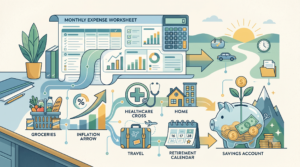
Use this process:
Step 1: Track Current Spending
Review at least several months of actual expenses.
Step 2: Remove Costs That May End
Identify expenses related to work, childcare, debt, or other temporary responsibilities.
Step 3: Add Future Costs
Include healthcare, repairs, travel, insurance, taxes, family support, and hobbies.
Step 4: Estimate Inflation
Use a reasonable range rather than assuming today’s prices will remain unchanged.
Step 5: Identify Income Sources
List public benefits, pensions, savings, accounts, investments, and other income.
Step 6: Consider Different Retirement Stages
Estimate early, middle, and later retirement expenses.
Step 7: Review Annually
Update the plan after changes in income, health, housing, family, or investment accounts.
This will not create a perfect prediction. It will create a more informed starting point.
Why Starting Early Helps
Starting early gives contributions more time to potentially grow.
A retirement account may benefit from:
- Regular contributions
- Reinvested returns
- Employer contributions
- Long time horizons
- Gradual increases as income rises
Read how compound growth works in retirement accounts for a detailed explanation.
Starting early does not guarantee a certain outcome. Investment returns vary, and fees and inflation affect results.
However, early planning gives you more time to:
- Adjust contributions
- Change goals
- Build emergency savings
- Reduce debt
- Learn about account options
- Respond to income changes
Time can provide flexibility, even when the initial contributions are small.
A Realistic Retirement Planning Example
Suppose a person currently spends $3,500 per month.
They estimate that retirement spending may include:
- $2,300 for housing and utilities
- $500 for food
- $250 for transportation
- $300 for healthcare
- $300 for hobbies and travel
- $250 for insurance and taxes
- $200 for home maintenance
- $200 for miscellaneous costs
The estimated total is $4,300 per month, not $3,500.
The person then lists potential income:
- Public benefits
- Workplace pension
- Personal retirement savings
- Part-time work
Instead of assuming the savings account alone must cover the full amount, they identify the expected income gap and review how to prepare for it.
The numbers are only an example. The important step is building the estimate from actual future categories rather than guessing from current income alone.
Common Retirement Planning Blind Spots
- Ignoring healthcare: Medical and support costs may be higher than expected.
- Assuming the mortgage removes all housing costs: Repairs, taxes, insurance, and utilities continue.
- Using today’s prices: Inflation reduces future purchasing power.
- Forgetting taxes: Account balances may not equal spendable income.
- Planning for one fixed lifestyle: Spending may change across retirement stages.
- Counting on work continuing: Health or job conditions may force earlier retirement.
- Ignoring a partner’s needs: Income and expenses may change after one partner dies.
- Supporting family without limits: Ongoing gifts can affect long-term security.
- Underestimating longevity: Savings may need to last longer than expected.
- Failing to review: Old assumptions may no longer match current life.
Frequently Asked Questions
Why do people underestimate retirement needs?
People often forget healthcare, inflation, taxes, home maintenance, longevity, family support, and changing spending patterns. They may also assume current expenses will stay the same.
How much will I need in retirement?
There is no universal amount. Estimate your future expenses, expected income, inflation, healthcare, housing, taxes, and the length of retirement.
Will I spend less after retiring?
Some costs may decline, such as commuting or work clothing. Other expenses, including healthcare, travel, hobbies, or home repairs, may increase.
Should I include healthcare in retirement planning?
Yes. Review premiums, deductibles, prescriptions, dental care, specialist visits, equipment, and possible support needs according to your local system.
What if I started saving late?
Review current savings, income, debt, expenses, employer benefits, and timeline. You may need to increase contributions, delay retirement, reduce expenses, or seek qualified advice. Read how to catch up on retirement savings.
Should I pay off my home before retirement?
The right decision depends on interest, liquidity, income, housing plans, and other goals. A paid-off home can reduce one cost, but using all savings to repay it may reduce flexibility.
How often should I update my retirement plan?
Review it at least annually and after major changes in income, health, housing, family responsibilities, or investment accounts.
Can I rely on public retirement benefits?
Public benefits vary by country, eligibility, amount, and future policy. Include them only after understanding the rules that apply to you.
Key Takeaways
- Retirement needs are often underestimated because important future expenses are overlooked.
- Track current spending, then adjust for costs that may end and costs that may increase.
- Include healthcare, inflation, taxes, housing, maintenance, longevity, and family support.
- Consider early, middle, and later retirement spending patterns.
- Identify all possible income sources and the gaps they may leave.
- Starting early gives contributions more time to potentially grow.
- Employer matching and consistent contributions can support retirement savings.
- Review your plan regularly rather than relying on an old estimate.
- Readers can continue with compound growth in retirement accounts, employer matching, and catching up after a late start.
- Managing debt before retirement may also require a clear debt payoff strategy.
A realistic retirement plan does not need to predict every expense perfectly. It needs to identify the major costs, recognize uncertainty, and give you enough information to adjust over time.
The earlier you examine your retirement needs, the more choices you may have. Start with your actual spending, add the costs people commonly overlook, and update the plan whenever your life changes.
This article is for informational purposes only and is not retirement or investment advice.
Leave a Reply
You must be logged in to post a comment.