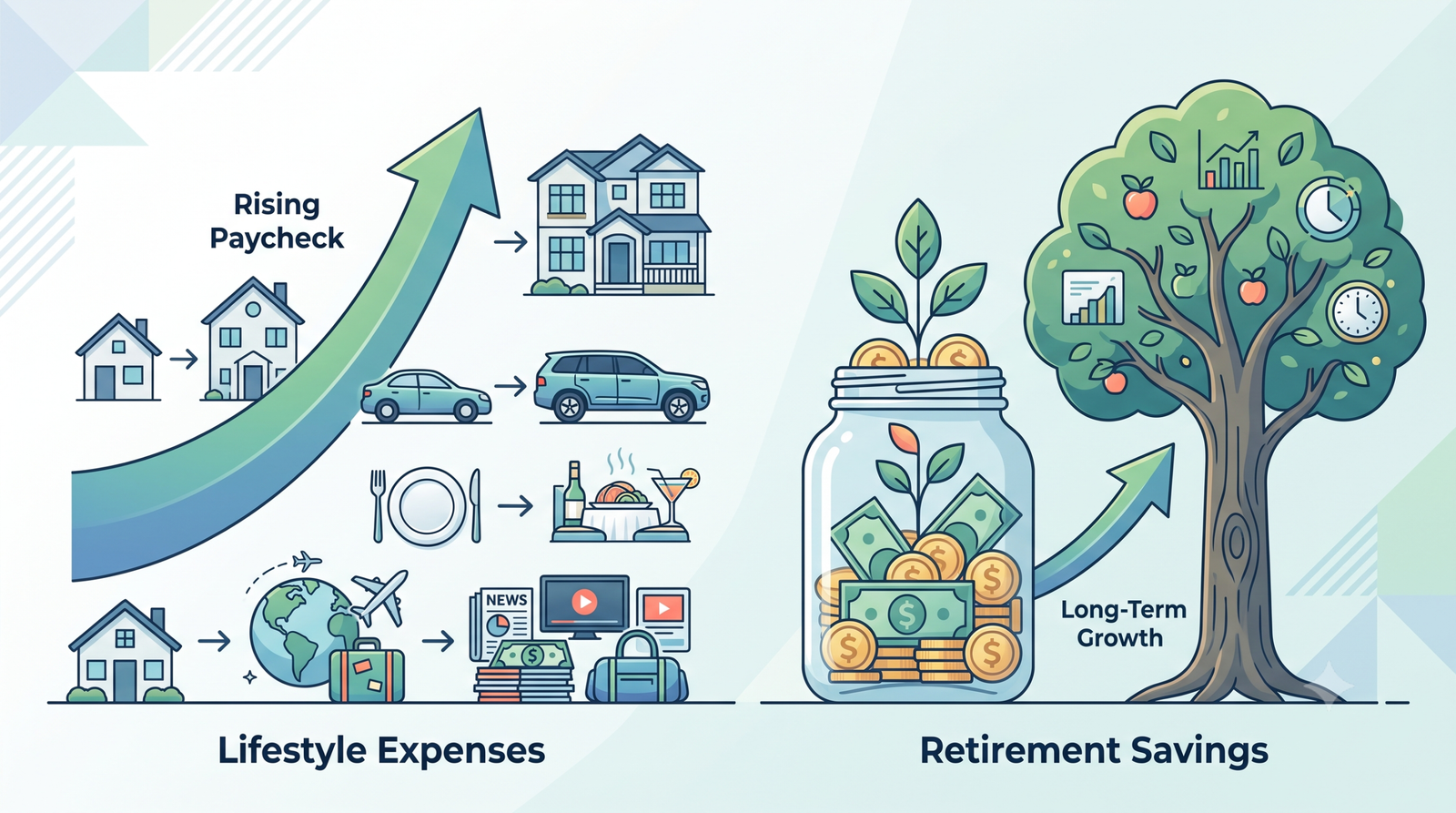
A raise is usually good news. More income can make it easier to pay bills, reduce debt, save for goals, and enjoy life.
But higher income does not always lead to greater financial security.
As earnings increase, spending often rises too. A larger home, newer car, more expensive meals, additional subscriptions, frequent travel, and upgraded services can absorb the entire increase.
This pattern is called lifestyle creep or lifestyle inflation.
Lifestyle creep is not always irresponsible. Some expenses improve your quality of life or become necessary as your responsibilities change. The problem occurs when every income increase becomes a permanent expense, leaving little more available for retirement savings or long-term goals.
This guide explains lifestyle creep and retirement savings, why raises do not always increase long-term wealth, how to use extra income intentionally, and how to improve your lifestyle without sacrificing future financial flexibility.
It also connects to compound growth in retirement accounts, because money contributed earlier may have more time to potentially grow.
What Is Lifestyle Creep?
Lifestyle creep occurs when spending increases as income increases.
It may happen gradually:
- A small raise leads to more restaurant meals
- A promotion leads to a larger apartment
- A bonus leads to a new vehicle
- A new job leads to more convenience services
- A higher salary leads to more expensive vacations
- A growing family leads to larger recurring commitments
Because the changes happen slowly, they may not feel like major decisions.
However, recurring expenses can become permanent. Once you become accustomed to a more expensive lifestyle, reducing spending later may feel like losing something.
Lifestyle creep can affect:
- Housing
- Transportation
- Food
- Clothing
- Entertainment
- Travel
- Technology
- Childcare
- Personal services
- Subscriptions
- Hobbies
The issue is not spending more. The issue is allowing spending to grow automatically without deciding whether the increase supports your goals.
Why Raises Do Not Always Increase Savings
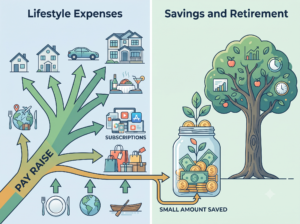
A raise may disappear because:
Fixed Costs Increase
A larger home, vehicle payment, insurance premium, or childcare bill can create permanent obligations.
Spending Becomes Automatic
You may not consciously decide to spend more. A higher account balance simply makes more purchases feel affordable.
Expectations Change
A new standard of comfort can quickly feel normal.
Social Comparison Increases
A promotion may place you among coworkers or friends with more expensive lifestyles.
Short-Term Rewards Feel More Real
A new vehicle or vacation provides an immediate benefit, while retirement savings may be decades away.
Taxes Reduce the Actual Increase
A salary increase is not the same as the amount that reaches your bank account. Understand the effect on take-home income before changing your budget.
Debt Payments Absorb the Raise
Higher income may make larger loans or credit limits available, encouraging additional borrowing.
The first step is to calculate the real amount of extra income rather than reacting to the headline salary increase.
How Lifestyle Creep Affects Retirement
Retirement savings benefit from regular contributions and time.
When lifestyle costs increase, you may:
- Contribute the same amount despite earning more
- Stop increasing retirement contributions
- Miss employer matching opportunities
- Delay debt repayment
- Reduce emergency savings
- Take on larger fixed payments
- Need a higher retirement income later
A raise that could have increased retirement contributions may instead become a larger monthly obligation.
For example, if your take-home pay increases by $400 per month and your lifestyle costs increase by $400, your future savings rate may not improve at all.
The exact long-term cost depends on how much could have been saved, the account, fees, investment returns, taxes, and time. The key point is that money not contributed cannot benefit from future potential growth.
Separate One-Time Rewards From Permanent Costs
A useful rule is:
Use one-time income for one-time choices, and be cautious about turning it into a permanent bill.
A bonus may be used for:
- A planned trip
- Debt repayment
- A home repair
- A family experience
- Emergency savings
- Retirement contributions
A raise, however, may continue for years. Use part of a recurring raise to support recurring savings before increasing recurring spending.
Permanent costs deserve more caution because they remain even if income later falls.
Before taking on a new monthly obligation, ask:
- Can I afford it during a lower-income period?
- Does it create a contract?
- Does it require debt?
- Will it affect retirement contributions?
- Will it reduce emergency savings?
- Is the improvement worth the long-term commitment?
Use a Raise Allocation Rule
Create a rule before the next raise arrives.
For example:
- 50% toward retirement or long-term savings
- 25% toward debt repayment
- 15% toward a lifestyle improvement
- 10% toward flexible spending
The percentages are examples. You can choose a different split based on your circumstances.
Other approaches include:
- Increase retirement contributions by 1% after every raise
- Save half of every income increase
- Direct all bonuses to goals
- Increase personal spending only after emergency savings reaches a target
- Use raises to fund sinking funds
A rule prevents the entire raise from being absorbed by new expenses before you decide what matters most.
Avoid Increasing Housing Costs Too Quickly
Housing is one of the most powerful forms of lifestyle creep because rent or mortgage payments become a large recurring commitment.
A more expensive home may also increase:
- Utilities
- Insurance
- Maintenance
- Furniture
- Property taxes
- Transportation
- Repairs
- Cleaning costs
A larger home may be appropriate if your family grows or your circumstances change. But do not assume that a lender’s maximum approval is the same as a comfortable long-term budget.
Compare the complete housing cost with:
- Retirement contributions
- Emergency savings
- Debt
- Childcare
- Healthcare
- Transportation
- Other life goals
Keeping housing costs manageable can create more flexibility for retirement and unexpected expenses.
Review Transportation Lifestyle Creep
A higher income can make a newer or more expensive vehicle seem reasonable.
But a vehicle may involve:
- Loan payment
- Insurance
- Fuel
- Maintenance
- Registration
- Parking
- Repairs
- Depreciation
Before upgrading, compare the full annual cost.
Ask:
- Is my current vehicle unsafe or unreliable?
- Does the upgrade solve a real problem?
- Could I buy a less expensive replacement?
- Will the payment reduce retirement savings?
- What happens if income falls?
- Would I still want the vehicle if nobody saw it?
A safer or more reliable vehicle may be worth the cost. A status upgrade may deserve more careful consideration.
Upgrade Selectively
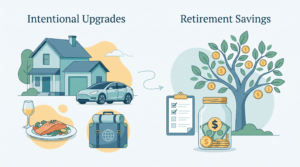
You do not need to reject every lifestyle improvement.
Instead, choose the upgrades that provide lasting value.
Possible meaningful improvements include:
- Better health
- More time with family
- A safer home
- Reliable transportation
- Education
- Reduced commuting
- Better work equipment
- Important experiences
When upgrading, consider reducing spending in categories that matter less.
For example:
- Spend more on travel while keeping an older vehicle
- Move to a better home while reducing expensive subscriptions
- Buy higher-quality food while cooking more often
- Pay for a useful service while reducing shopping
Intentional spending allows you to improve life without increasing every category at once.
Protect Retirement Contributions
Review your retirement contribution whenever your income changes.
Ask:
- Am I receiving the available employer match?
- Can I increase contributions gradually?
- Are fees understood?
- Has my account changed?
- Does my investment approach fit my timeline?
- Am I reducing contributions to support optional spending?
- What happens if I increase housing or vehicle costs?
Read how employer matching works to understand how workplace contributions may affect your plan.
A contribution increase of 1% may seem small, but repeated increases can help your savings rate grow alongside your income.
Do not contribute so much that you cannot pay essential expenses or high-cost debt. Retirement savings should fit within a complete financial plan.
Use Sinking Funds to Prevent Lifestyle Pressure
Sinking funds can help separate planned lifestyle upgrades from everyday spending.
Create funds for:
- Travel
- Home improvements
- Vehicle replacement
- Technology
- Education
- Annual insurance
- Family events
When you want an upgrade, save for it instead of automatically financing it.
Read what is a sinking fund for a detailed explanation.
A sinking fund also reveals the true cost of a purchase. If you are unwilling to save for it over time, that may provide useful information about whether it deserves priority.
A Realistic Raise Example
Suppose an employee receives an extra $500 per month after taxes.
Without a plan, the money is gradually spent on:
- $200 more for housing
- $100 more for restaurants
- $75 for subscriptions and services
- $75 for shopping
- $50 for transportation
The full increase disappears.
Instead, the employee chooses:
- $200 toward retirement savings
- $125 toward debt repayment
- $75 toward a travel fund
- $50 toward personal spending
- $50 toward a home-repair sinking fund
The employee still receives lifestyle benefits, but the raise also improves long-term financial security.
The exact allocation depends on debt, income, goals, and household responsibilities. The important step is deciding before spending expands.
Common Lifestyle Creep Mistakes
- Increasing every expense after a raise: Not every category needs an upgrade.
- Adding permanent payments for temporary income: Bonuses and overtime may not continue.
- Ignoring taxes: Gross income does not equal take-home pay.
- Reducing retirement contributions: Future savings may lose valuable time.
- Taking on a larger home too quickly: Housing costs affect many other categories.
- Using debt for status purchases: Loan payments can reduce flexibility.
- Comparing with higher earners: Their income and responsibilities may be different.
- Treating every comfort as necessary: Some upgrades are wants, not needs.
- Spending bonuses automatically: One-time money can support goals instead.
- Failing to review the budget: Small increases can become a major monthly burden.
Frequently Asked Questions
What is lifestyle creep?
Lifestyle creep occurs when spending increases as income increases, often through larger recurring expenses and upgraded consumption.
Why do raises not always increase savings?
Raises can be absorbed by higher housing, transportation, dining, subscriptions, debt payments, and other lifestyle costs before savings are increased.
How much of a raise should I save?
There is no universal percentage. Many people choose to save a portion before increasing spending. A gradual contribution increase may be easier to maintain.
Is lifestyle creep always bad?
No. Some lifestyle improvements are valuable or necessary. The problem is allowing spending to rise automatically without considering long-term goals.
How can I enjoy a raise without hurting retirement savings?
Set aside retirement savings first, choose one or two meaningful upgrades, and avoid increasing every recurring expense.
Should bonuses go toward retirement?
A bonus can support retirement, debt, emergency savings, or a planned experience. Decide based on your goals and financial needs rather than spending it automatically.
How can I prevent higher housing costs from hurting savings?
Compare total housing costs with retirement contributions, debt, childcare, transportation, and emergency savings before moving or taking on a larger payment.
Can a sinking fund help with lifestyle upgrades?
Yes. Saving gradually for travel, technology, vehicles, or home improvements can help you avoid high-cost borrowing and make the true cost visible.
Key Takeaways
- Lifestyle creep occurs when spending rises as income increases.
- Raises do not automatically improve retirement savings if new recurring costs absorb them.
- Use a raise allocation rule before additional income arrives.
- Protect retirement contributions and available employer matching benefits.
- Be cautious about increasing housing, transportation, and other fixed expenses.
- Use sinking funds for planned lifestyle upgrades.
- Spend more on priorities that genuinely improve your life and less on automatic upgrades.
- Consider taxes, debt, emergency savings, and long-term goals before changing your lifestyle.
- Readers can continue with compound growth in retirement accounts, employer matching, and goal-based saving.
- The guide on sinking funds can help organize planned upgrades without new debt.
A raise can improve your current life and your future financial security, but only if you decide where the extra money should go before lifestyle costs expand.
You do not need to reject every improvement. Choose upgrades intentionally, protect retirement contributions, and use part of each income increase to build flexibility for the future.
This article is for informational purposes only and is not retirement or investment advice.
Leave a Reply
You must be logged in to post a comment.