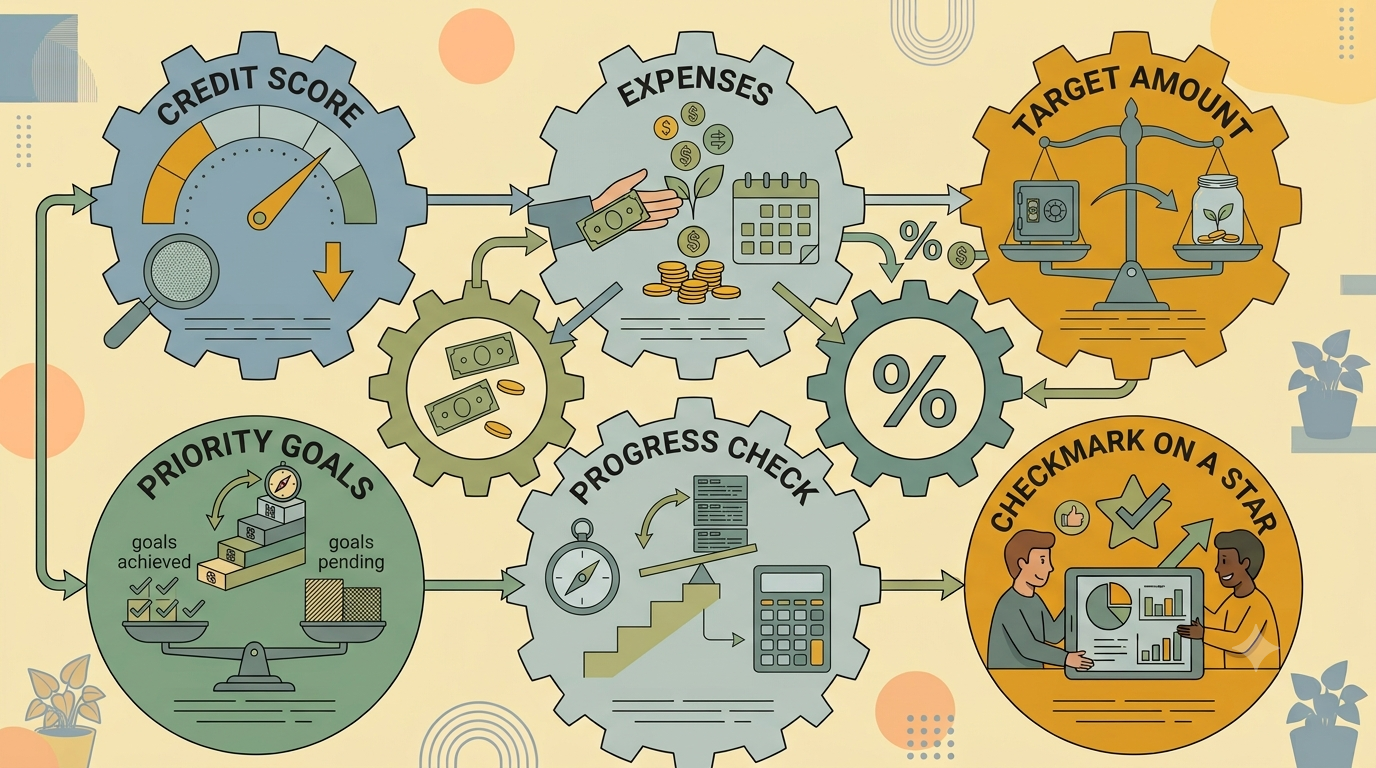
Few financial moments feel as confusing as opening a credit monitoring app and seeing a lower number than last month — especially when nothing about your spending or payments felt different. In almost every case, though, there’s a specific, identifiable reason behind the drop. It’s just rarely the reason people assume.
This guide walks through the most common reasons a score drops unexpectedly, ranked roughly by how frequently they’re the actual cause. If you haven’t already read our breakdown of how credit scores actually work, it’s worth skimming first — the reasons below will make more sense with that foundation in place.
Reason 1: A Late or Missed Payment
This is, by a wide margin, the most common cause of a significant, sudden drop. Because payment history carries the heaviest weight in most scoring models, even a single payment reported 30 or more days late can cause a noticeable decline — sometimes 50 to 100 points or more, depending on the overall strength of the credit profile beforehand.
What to check: Review recent statements across every account, including ones that are easy to forget, like a store card or a subscription service billed through a credit line. A payment that was a few days late but caught before the 30-day reporting threshold typically isn’t reported as late at all — the drop usually corresponds to something that crossed that specific threshold.
Reason 2: A Sudden Increase in Credit Utilization
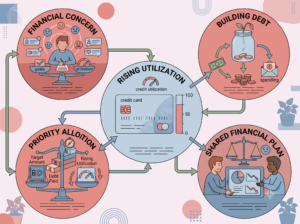
A large purchase, a balance transfer, or simply a higher-than-usual statement balance can push utilization up significantly in a single reporting cycle. Because utilization is calculated at the moment a lender reports to the credit bureau — not based on your current balance today — even a balance that’s since been paid down can still show as high utilization if it was elevated on the reporting date.
What to check: Compare current balances against credit limits, both per card and combined across all accounts. A jump from 15% to 45% utilization on even one card can noticeably affect the score, even without any missed payments.
Reason 3: A Reduced Credit Limit
Lenders occasionally reduce a credit limit — sometimes due to reduced card usage, sometimes due to a broader risk reassessment unrelated to your specific behavior. When a limit drops, utilization automatically rises even if the balance itself hasn’t changed at all, since utilization is a ratio between the two.
What to check: Look for a notification from a card issuer about a credit limit change. This cause is often the most surprising to people, since it can happen without any action on their part.
Reason 4: A Closed Account
Closing a credit card — whether done on purpose or because the issuer closed it due to inactivity — can affect the score in two ways: it reduces total available credit, which raises utilization, and it can eventually lower the average age of accounts once the closed account ages out of the calculation.
What to check: Review whether any card was recently closed, including a card closed by the issuer rather than by you. Some issuers close inactive accounts automatically after a period of no use, which can catch people off guard.
Reason 5: A New Hard Inquiry
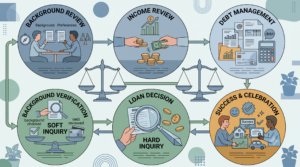
Applying for a new credit card, auto loan, or other financing typically triggers a hard inquiry, which can cause a small, temporary dip — usually just a few points. This is one of the more minor and short-lived causes on this list, but it’s also one of the most common, especially for people who recently shopped for a car loan or applied for a new card.
What to check: Recall any credit applications from the past few weeks. Our full breakdown of hard inquiry vs soft inquiry covers exactly how much impact this tends to have and how long it typically lasts.
Reason 6: An Error on Your Credit Report
Less common, but not rare — credit reports do occasionally contain errors, such as a payment incorrectly marked late, an account that doesn’t belong to you, or outdated information that should have already aged off the report. These errors can cause a drop that has nothing to do with your actual financial behavior.
What to check: Pull a full credit report and review each account listed for accuracy, paying particular attention to any payment marked late that doesn’t match your own records.
Reason 7: Co-Signed or Joint Account Activity
If you’re a co-signer or joint account holder on someone else’s credit line, that account’s activity affects your score too — including a late payment made by the other person, which you may not immediately be aware of.
What to check: Review any co-signed or joint accounts for recent activity, since this cause is easy to overlook when reviewing only accounts opened solely in your own name.
How to Actually Diagnose the Drop
Rather than guessing, the most reliable approach is a full credit report review, since it typically shows exactly which factor changed and when. Most major credit monitoring tools and free annual credit report services will flag the specific change — a new inquiry, a reported late payment, a utilization shift — making the diagnosis far more precise than trying to reason backward from memory alone.
Once the specific cause is identified, the appropriate next step usually becomes clear: a genuine late payment may need to be addressed directly with the lender, an error may need to be disputed, and a utilization spike may simply resolve on its own once the balance is paid down and the next reporting cycle reflects the change. For a broader, structured approach to addressing multiple issues at once, see our guide to how to repair bad credit.
Common Mistakes When Reacting to a Score Drop
- Panicking before identifying the actual cause. A drop caused by a temporary utilization spike requires a completely different response than one caused by an error or a genuine missed payment — reacting before diagnosing often wastes effort.
- Assuming the drop is permanent. Many common causes, especially utilization spikes and hard inquiries, are temporary and tend to resolve within one to a few reporting cycles once the underlying cause is addressed.
- Closing more accounts in response. This instinct often makes things worse, not better, since it can further reduce available credit and shorten average account age.
- Ignoring a small drop entirely. While minor drops usually aren’t worth significant concern, they’re still worth a quick check — a small utilization change can sometimes be an early sign of a larger pattern worth addressing.
- Not disputing a genuine error. Errors on a credit report don’t correct themselves automatically; they need to be actively disputed with the credit bureau to be resolved.
A Realistic Example
Someone notices their score dropped 40 points in a single month. Reviewing their credit report, they find no missed payments, but discover their utilization jumped from 12% to 38% because of a large annual expense charged to one card that hadn’t yet been paid off by the statement closing date.
Understanding this, the fix is straightforward: pay down the balance before the next statement closes, rather than assuming something more serious happened. Within one to two reporting cycles after the balance drops back to a normal level, the score typically recovers most or all of the temporary decline — illustrating how a utilization-driven drop, while alarming in the moment, is usually one of the more quickly reversible causes on this list.
Frequently Asked Questions
How much can a single late payment drop my score?
It varies based on the overall strength of the credit profile beforehand, but a single payment reported 30+ days late can cause a drop of 50 to 100 points or more for someone with an otherwise strong credit history.
How long does it take for a score to recover after a temporary cause like high utilization?
Once the underlying balance is paid down and reported, most people see meaningful recovery within one to two reporting cycles, typically one to two months.
Should I check my credit report every time my score drops?
For any drop larger than a few points, yes — a full report review is the most reliable way to identify the actual cause rather than guessing.
Can my score drop even if I did everything right?
Yes. Causes like a lender-initiated credit limit reduction, a co-signer’s missed payment, or a reporting error can all lower a score without any change in your own direct behavior.
Key Takeaways
- Late payments and utilization spikes are the two most common causes of a sudden, significant credit score drop.
- Less obvious causes — a reduced credit limit, a closed account, a co-signed account, or a reporting error — can also be responsible and are easy to overlook.
- The most reliable way to understand a drop is a full credit report review rather than guessing based on memory.
- Many common causes, especially utilization-related ones, are temporary and tend to resolve within a few reporting cycles.
- Understanding how credit scores actually work makes diagnosing a drop far faster, and a broader strategy for improvement is covered in how to repair bad credit.
A sudden score drop feels alarming mostly because the cause isn’t visible at first glance. Once identified, though, most causes are either temporary and self-resolving or directly actionable — which turns a confusing, anxiety-inducing number change into a specific, solvable problem.
This article is for informational purposes only and is not financial advice.
Leave a Reply
You must be logged in to post a comment.