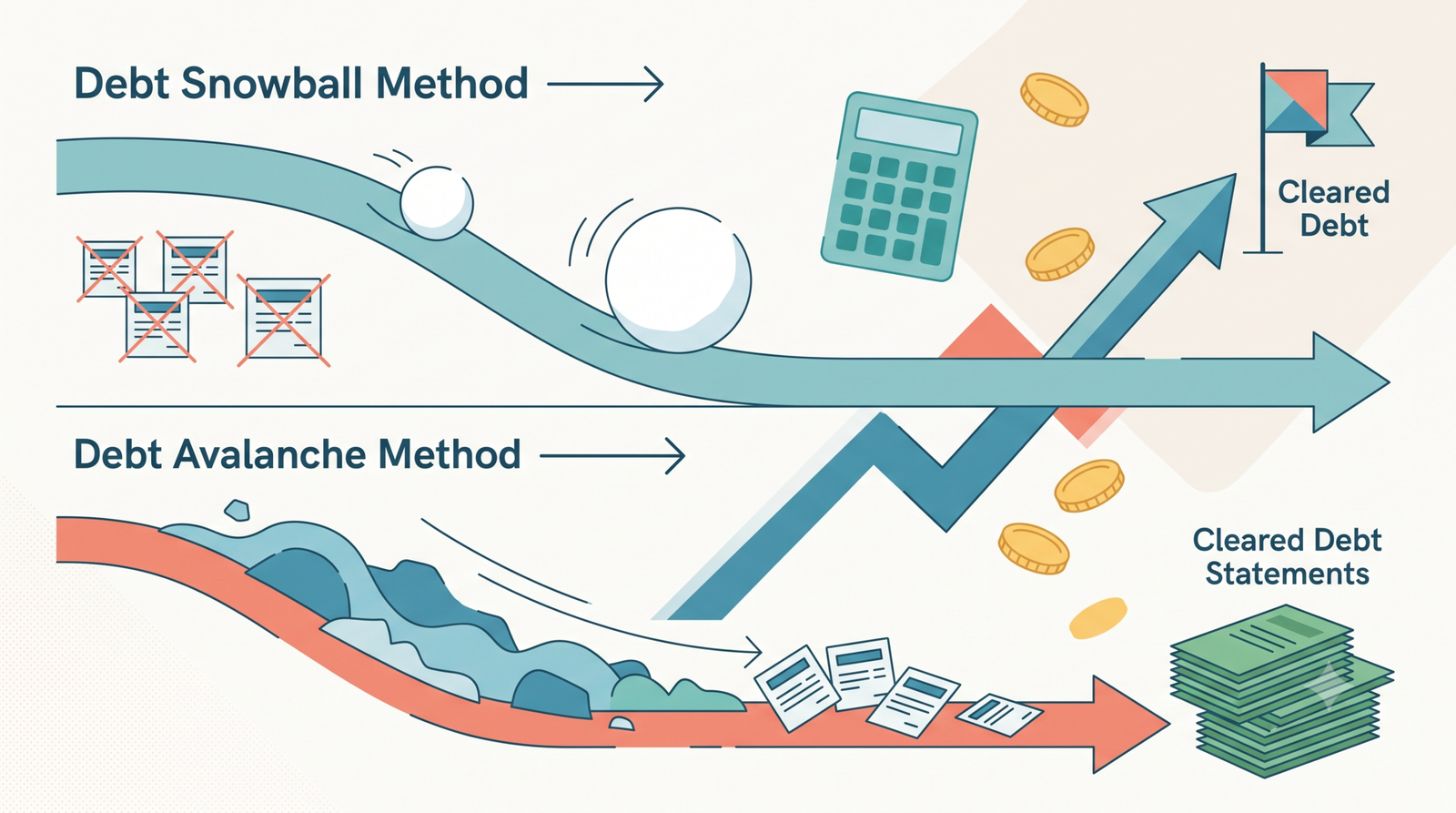
When you have multiple debts, choosing a repayment method can feel almost as difficult as making the payments themselves.
Two of the most commonly discussed approaches are:
- The debt snowball method
- The debt avalanche method
Both methods require you to make the minimum payment on every debt while directing extra money toward one priority balance.
The difference is how you choose that priority.
The snowball method focuses on the smallest balance first. The avalanche method focuses on the highest interest rate first.
One approach emphasizes motivation and quick wins. The other emphasizes reducing interest costs. Neither method is automatically right for every household.
This guide explains debt snowball vs debt avalanche, how both methods work, the financial and psychological differences, how to calculate your priorities, and how to choose a strategy you can maintain.
It also connects to the broader debt payoff strategy guide, which covers debt lists, emergency savings, interest reduction, and consolidation.
The Rule Both Methods Share
Before comparing the methods, understand the rule they have in common:
Make the required minimum payment on every debt, then direct extra money toward one selected debt.
For example, suppose you have:
| Debt | Balance | Interest Rate | Minimum Payment |
|---|---|---|---|
| Medical bill | $500 | 0% | $50 |
| Credit card | $2,500 | 24% | $80 |
| Personal loan | $6,000 | 12% | $180 |
If you have $250 available for extra repayment, you continue paying all minimums and apply the additional $250 to one priority debt.
The strategy determines which debt receives the extra payment.
Do not stop paying the minimums on other accounts. Missing a required payment can create fees, collection activity, or additional credit problems.
What Is the Debt Snowball Method?
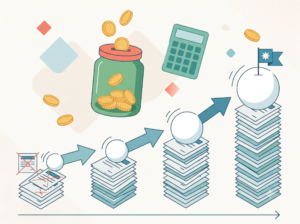
The debt snowball method orders debts from the smallest balance to the largest, without considering interest rate.
Using the example above:
- Medical bill: $500
- Credit card: $2,500
- Personal loan: $6,000
You pay minimums on all three accounts and direct extra money toward the $500 medical bill.
Once it is paid off, you add its former minimum payment to the extra amount directed toward the credit card.
Example
Suppose the medical bill requires a $50 minimum and you have $250 extra.
While paying the medical bill:
- Medical minimum: $50
- Extra payment: $250
- Total toward medical bill: $300
After it is paid off, you can direct:
- Former medical payment: $50
- Original extra payment: $250
- Total additional amount toward the next debt: $300
The payment grows like a snowball as each balance is removed.
Advantages of the Snowball
- Provides an early win
- Reduces the number of accounts
- Makes the payment system simpler
- Creates visible progress
- May improve motivation
- Can reduce the feeling of being overwhelmed
Disadvantages of the Snowball
- May cost more interest
- A high-interest balance may remain open longer
- It may not be the mathematically cheapest option
- A large high-rate balance could continue growing
The snowball may suit people who need quick progress to remain committed.
What Is the Debt Avalanche Method?
The debt avalanche method orders debts from the highest interest rate to the lowest interest rate.
Using the same example:
- Credit card: 24%
- Personal loan: 12%
- Medical bill: 0%
You pay minimums on all debts and direct extra money toward the credit card.
Once the credit card is paid off, you move to the personal loan and then the medical bill.
Advantages of the Avalanche
- May reduce total interest
- Targets the most expensive debt
- Can shorten the cost of borrowing
- May be mathematically efficient
- Helps prevent high-rate balances from remaining too long
Disadvantages of the Avalanche
- The first balance may take a long time to eliminate
- Progress may feel slow
- The largest balance may be the first priority
- Motivation may be difficult if there are no quick wins
The avalanche may suit people who are comfortable waiting for the financial benefit of reducing interest.
Snowball vs Avalanche Comparison
| Feature | Snowball | Avalanche |
|---|---|---|
| Priority | Smallest balance | Highest interest rate |
| Main focus | Motivation | Interest savings |
| Early progress | Usually faster | May be slower |
| Potential total cost | May be higher | Often lower |
| Best fit | People who need visible wins | People focused on mathematical efficiency |
| Minimum payments | Required on all debts | Required on all debts |
| Risk of failure | Giving up if interest feels inefficient | Giving up if progress feels slow |
These are general comparisons. Your actual result depends on balances, rates, fees, minimum payments, and how consistently you follow the plan.
Which Method Saves More Money?
The avalanche method will often save more interest when:
- Interest rates differ significantly
- You have high-rate credit card debt
- You can remain committed
- You do not add new balances
- Payment terms stay consistent
The snowball may still be more valuable if it helps you continue paying debt instead of abandoning the plan.
A strategy that saves theoretical interest but is not followed is less useful than a strategy that you can maintain.
The financial difference depends on the numbers. You can compare both approaches using a calculator or spreadsheet.
Track:
- Total extra payment
- Interest rate
- Minimum payment
- Expected payoff date
- Total interest
- Number of accounts remaining
Avoid relying on a headline such as “the avalanche is always best.” Mathematics matters, but behavior affects the final result.
Why Motivation Matters
Debt can create emotional fatigue.
You may feel:
- Ashamed
- Frustrated
- Trapped
- Overwhelmed
- Impatient
- Anxious
- Discouraged
Eliminating one small balance can provide relief even if it does not save the most interest.
That relief may help you:
- Keep tracking payments
- Stop using credit
- Maintain the plan
- Feel more in control
- Continue toward the next balance
The psychological benefit is not imaginary. A plan must be followed in real life, not only calculated on paper.
Read why paying off debt feels hard for more information about the emotional side of repayment.
Consider a Hybrid Method
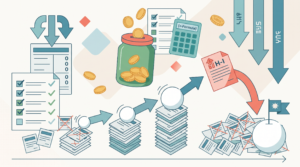
You can combine both methods.
Examples include:
- Pay off one very small balance, then switch to the highest interest rate
- Target an overdue account first, then use the avalanche
- Remove a debt with a complicated payment, then continue by interest rate
- Use a bonus to eliminate one balance and follow the snowball afterward
- Prioritize a debt with serious consequences, then return to the chosen method
A hybrid method may be useful when your debt list has one small balance that causes stress and one high-interest balance that is expensive.
The strategy should remain clear enough to follow. Changing the order every week can create confusion.
How to Choose the Right Method
Ask yourself:
Do I Need an Early Win?
If seeing one account disappear would help you stay motivated, the snowball may be useful.
Are Interest Rates Very Different?
If one balance has a much higher rate, the avalanche may save more money.
Have Previous Plans Failed Because of Motivation?
If you have started and stopped several times, choose the method most likely to keep you engaged.
Can I Delay a Result?
The avalanche may require patience if the highest-rate debt has a large balance.
Is One Debt Urgent?
A debt in collections, an overdue account, or a secured debt may require special attention.
Can I Stop Adding New Debt?
Neither method works well if new balances continue to replace your payments.
Is the Plan Simple Enough?
A simple plan is easier to maintain and explain.
Protect Your Budget While Paying Debt
Do not make extra payments so aggressive that you cannot cover normal life.
Maintain money for:
- Housing
- Food
- Utilities
- Transportation
- Healthcare
- Insurance
- Minimum payments
- A small emergency buffer
- Predictable expenses
Use a sinking fund for planned costs such as car repairs, insurance, school fees, or annual bills. This can prevent you from using credit again while paying down existing balances.
Read what is a sinking fund for more on preparing for predictable expenses.
Debt repayment should fit into a complete financial plan.
A Realistic Comparison Example
Suppose someone has:
| Debt | Balance | Interest Rate |
|---|---|---|
| Medical bill | $600 | 0% |
| Credit card A | $1,800 | 25% |
| Personal loan | $4,000 | 10% |
They can pay minimums plus $300 extra each month.
Snowball Order
- Medical bill: $600
- Credit card: $1,800
- Personal loan: $4,000
The medical bill may be eliminated quickly, creating an early win.
Avalanche Order
- Credit card: 25%
- Personal loan: 10%
- Medical bill: 0%
The credit card receives extra payments because it is the most expensive.
If the person has previously abandoned mathematically efficient plans because progress felt slow, they may choose the snowball. If they are confident they can remain committed, the avalanche may reduce interest costs.
Neither choice is automatically irresponsible. The important part is following through.
Common Mistakes When Choosing a Debt Method
- Assuming one method works for everyone: Your behavior and numbers matter.
- Ignoring interest rates: High-cost debt may grow quickly.
- Paying extra while missing minimums: Keep every required payment current.
- Using all savings for debt: A small emergency can create new borrowing.
- Continuing to use credit cards: New balances slow or reverse progress.
- Changing methods constantly: Choose an approach and review it periodically.
- Forgetting fees: Fees can affect the real cost.
- Ignoring overdue or secured debt: Some accounts may require special attention.
- Expecting instant motivation: Progress takes time.
- Comparing your results with someone else’s: Debt amounts and income differ.
Frequently Asked Questions
Which is better, debt snowball or debt avalanche?
The avalanche may reduce interest costs, while the snowball may provide stronger motivation. The better method is the one you can maintain consistently.
Does the debt snowball save money?
It can help you become debt-free, but it may cost more interest if a higher-rate debt remains unpaid longer. The emotional benefit may still make it effective for some people.
Is the debt avalanche always the best method?
It may be mathematically efficient, but it is not automatically best if the slow early progress causes you to stop following the plan.
Can I combine the snowball and avalanche methods?
Yes. A hybrid approach may involve paying off one small balance first and then targeting the highest-interest debt.
Should I pay the smallest balance or highest interest rate first?
Compare your financial numbers and your behavior. Choose the method that balances interest savings with your ability to stay committed.
Should I keep saving while paying off debt?
A small emergency buffer may help prevent new borrowing. The appropriate balance depends on interest rates, income, expenses, and household responsibilities.
What if I keep adding new debt?
Pause and review your budget. You may need to address income, essential expenses, spending triggers, or emergency savings before increasing extra debt payments.
How often should I review my debt method?
Review monthly or after a major change in income, expenses, interest rates, or debt terms. Avoid changing the method after every small setback.
Key Takeaways
- The debt snowball prioritizes the smallest balance.
- The debt avalanche prioritizes the highest interest rate.
- Both methods require minimum payments on every account.
- The avalanche may save more interest, while the snowball may create stronger motivation.
- A hybrid approach can combine quick wins with interest savings.
- Your budget should still cover essential expenses and a small emergency buffer where possible.
- Do not continue adding new debt while trying to repay old balances.
- Compare total interest, payoff timelines, fees, and your ability to stay consistent.
- There is no universal best debt payoff method.
- Readers can continue with debt payoff strategy, why paying off debt feels hard, and how to negotiate a lower interest rate.
- Those with older credit issues can also review how long negative items stay on a credit report.
The debt snowball and debt avalanche are both tools. The most important part is choosing a method, making required payments, directing extra money consistently, and avoiding new balances where possible.
If the avalanche helps you save interest and you can remain committed, it may be the right choice. If the snowball gives you the motivation to continue, its psychological benefit may outweigh the additional interest.
Choose the strategy that works not only on a spreadsheet but also in your real financial life.
This article is for informational purposes only and is not financial advice.
Leave a Reply
You must be logged in to post a comment.