Saving for a home down payment can feel like a distant goal, especially when rent, food, transportation, debt, and everyday expenses already use much of your income.
The challenge is not only the size of the target. Home prices, closing costs, moving expenses, repairs, insurance, and taxes may also affect how much money you need before buying.
A realistic down payment plan begins with a clear target and a timeline. From there, you can decide how much to save monthly, which costs to reduce, how to use extra income, and whether the target needs to change.
This guide explains how to save for a down payment faster, how to calculate the full target, prioritize savings, reduce large expenses, use additional income, and avoid using risky or unrealistic shortcuts.
Mortgage rules, minimum down payments, closing costs, taxes, and assistance programs vary by country and location. This article is general education, not personalized mortgage advice.
Start With the Full Home-Buying Target
A down payment is only one part of the money needed to buy a home.
Depending on the location and transaction, you may also need money for:
- Closing costs
- Legal fees
- Inspections
- Appraisals
- Taxes
- Moving
- Furniture
- Repairs
- Utility deposits
- Insurance
- Maintenance
- Emergency savings
Create a complete estimate before choosing a savings target.
For example:
| Goal Category | Estimated Amount |
|---|---|
| Down payment | $35,000 |
| Closing and legal costs | $6,000 |
| Moving expenses | $2,000 |
| Initial repairs and furnishings | $4,000 |
| Emergency reserve | $8,000 |
| Total target | $55,000 |
Your actual categories may differ. The purpose is to avoid reaching the down payment target while having no money left for the costs that follow.
A smaller down payment may reduce the time needed to buy, but it could affect loan costs, insurance, monthly payments, or eligibility depending on local rules.
Choose a Realistic Home Price Range
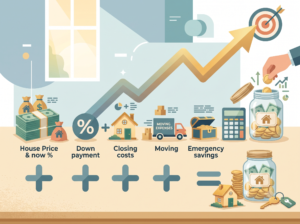
A larger home price creates a larger down payment target and may also increase:
- Monthly loan payments
- Property taxes
- Insurance
- Maintenance
- Utilities
- Repairs
- Furniture costs
Do not choose a target based only on what a lender may approve. Consider what your household could comfortably afford while continuing to save, manage debt, and handle unexpected costs.
Review:
- Income stability
- Existing debt
- Future childcare
- Transportation
- Healthcare
- Emergency savings
- Maintenance
- Potential interest changes
- Other financial goals
A slightly lower home price may allow you to save faster and maintain more flexibility after buying.
Calculate the Monthly Savings Required
Use the following formula:
Amount still needed ÷ Months until target date = Monthly contribution
Example:
- Full savings target: $50,000
- Current savings: $12,000
- Amount remaining: $38,000
- Time available: 36 months
$38,000 ÷ 36 = approximately $1,056 per month
If that amount is not realistic, adjust the plan rather than giving up.
Possible adjustments include:
- Extending the timeline
- Reducing the home price range
- Increasing income
- Reducing large expenses
- Using confirmed gifts or assistance
- Saving part of bonuses
- Delaying optional goals
- Choosing a different location
A monthly number makes the goal measurable. It also shows whether the target is compatible with your current income and responsibilities.
Keep Down Payment Savings Separate
A dedicated savings account or category can help protect the money from everyday spending.
Separate the down payment fund from:
- Emergency savings
- Vacation money
- Annual bills
- Car repairs
- Regular spending
- Business funds
- Retirement savings
You can use a separate account, bank sub-account, spreadsheet, or digital envelope.
Name the goal clearly and track:
- Starting balance
- Monthly contribution
- Interest or returns where applicable
- Withdrawals
- Expected target date
- Remaining amount
Do not use the down payment fund for optional purchases unless you have intentionally revised the home-buying plan.
Review Your Largest Monthly Costs
Small daily savings may help, but large expenses often have a bigger effect on the timeline.
Review:
- Housing
- Transportation
- Childcare
- Debt payments
- Insurance
- Phone and internet
- Subscriptions
- Regular food spending
For example, moving to less expensive housing for two years may create more savings than eliminating occasional coffee purchases.
However, a lower rent option may increase transportation or moving costs. Compare the total effect rather than focusing on one bill.
The same principle applies to vehicles. A lower payment may not be cheaper after fuel, insurance, repairs, and maintenance are included.
Use Extra Income Intentionally
Extra income may include:
- Bonuses
- Overtime
- Freelance work
- Seasonal employment
- Tax refunds
- Gifts
- Selling unused belongings
- A raise
- Rental or business income
Decide in advance how extra money will be divided.
For example:
- 60% down payment
- 20% emergency savings
- 10% debt repayment
- 10% personal spending
The percentages are examples only. The important step is assigning the money before it disappears into lifestyle spending.
Do not count uncertain income in the regular plan. Treat it as an acceleration tool rather than the foundation of the goal.
Reduce High-Cost Debt Carefully
High-interest debt can compete directly with down payment savings.
Review:
- Interest rates
- Minimum payments
- Balances
- Repayment timelines
- Fees
- Whether the debt affects mortgage eligibility
A down payment fund may grow while expensive debt continues to increase. Consider whether paying down high-cost debt first would improve your broader financial position.
Do not empty all savings to repay debt if doing so leaves you without any emergency protection.
The right balance depends on the debt, interest rate, income stability, mortgage plans, and personal circumstances.
Use Sinking Funds for Home-Buying Costs
A sinking fund can help prepare for costs that are predictable but not monthly.
Create categories for:
- Home inspection
- Legal fees
- Moving
- Furniture
- Initial repairs
- Appliances
- Utility deposits
- Insurance
- Property taxes
- Maintenance
For example, if you expect to spend $2,400 on moving and initial setup within two years:
$2,400 ÷ 24 = $100 per month
This amount should be included alongside the down payment contribution.
Read what is a sinking fund for more detail on planning predictable future expenses.
Keep Emergency Savings Separate
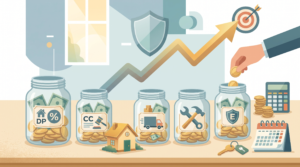
Buying a home can create new responsibilities. Protect an emergency fund instead of putting every available dollar into the down payment.
After buying, you may face:
- Heating or cooling repairs
- Plumbing problems
- Appliance replacement
- Insurance deductibles
- Maintenance
- Higher utility costs
- Unexpected travel
- Income changes
A down payment is a home-buying goal. An emergency fund protects your ability to keep managing life after the purchase.
The right emergency amount depends on your household, income, health, dependents, property, and expenses. A smaller home does not eliminate the need for reserves.
Consider Assistance and Gift Rules
Some locations offer programs that may help eligible buyers through:
- Down payment assistance
- Grants
- Low-interest programs
- Employer benefits
- First-time buyer programs
- Tax benefits
- Family gifts
- Community support
Rules and eligibility requirements vary.
If family members provide money, confirm whether it is:
- A gift
- A loan
- A shared ownership arrangement
- A contribution with conditions
Mortgage providers may require documentation. Do not accept money without understanding whether repayment, ownership, or legal obligations are involved.
Check official government, lender, or housing-agency information rather than relying on social media claims.
Choose the Right Place for the Savings
The appropriate savings location depends on the timeline and local financial options.
Money needed soon may need to remain:
- Accessible
- Stable
- Low risk
- Separate from everyday spending
A long-term goal may have different options, but investing introduces the possibility that the balance could decline when you need it.
Consider:
- Target date
- Flexibility of the purchase
- Risk tolerance
- Emergency savings
- Fees
- Taxes
- Access rules
- Local regulations
Do not choose an option only because it promises a higher return. A down payment is a specific goal with a deadline, so protecting the money may be more important than seeking maximum growth.
Review the Plan Every Three Months
A down payment plan can change because of:
- Home prices
- Income
- Interest rates
- Family responsibilities
- Rent
- Debt
- Savings progress
- Moving plans
- Employment
Every three months, review:
- Current savings
- Remaining target
- Monthly contribution
- Home price range
- Closing-cost estimate
- Emergency fund
- Debt balance
- Target date
If the numbers no longer work, adjust early.
A revised plan might involve:
- Extending the timeline
- Choosing a lower price range
- Increasing contributions
- Reducing the target
- Waiting for more stable income
- Exploring assistance
Changing the plan is better than forcing an unaffordable purchase.
A Realistic Down Payment Example
Suppose a couple wants to buy a home in three years.
Their target is:
- Down payment: $30,000
- Closing costs: $5,000
- Moving and repairs: $4,000
- Emergency savings: $6,000
- Total: $45,000
They currently have $9,000 saved, leaving $36,000.
$36,000 ÷ 36 months = $1,000 per month
They decide to save:
- $700 from regular income
- $150 from reduced transportation costs
- $100 from extra work
- $50 from canceled subscriptions
They also direct half of any bonus toward the goal.
After six months, their income changes and the extra work becomes unavailable. Instead of using credit to maintain the original plan, they extend the timeline by six months and review the target home price.
The plan remains realistic because it adapts to income changes.
Common Down Payment Savings Mistakes
- Focusing only on the down payment: Closing, moving, repairs, and emergency savings also matter.
- Choosing a home price before reviewing income: A larger target can create unaffordable monthly costs.
- Using all available savings: Homeownership requires cash after the purchase.
- Ignoring high-interest debt: Debt payments may affect affordability and savings.
- Relying on uncertain family support: Count only confirmed contributions.
- Taking excessive investment risk: A market decline can occur before the target date.
- Cutting only small expenses: Large recurring costs may create more savings potential.
- Forgetting maintenance: A home can create new repair obligations.
- Changing the target too often: Review periodically instead of reacting to every market headline.
- Buying before the budget is ready: Approval does not always equal affordability.
Frequently Asked Questions
How can I save for a down payment faster?
Set a complete target, review large expenses, automate savings, direct extra income toward the goal, reduce high-cost debt, and consider a lower home price or longer timeline.
How much should I save for a down payment?
The amount depends on the home price, local rules, lender requirements, closing costs, and your financial situation. Include money for moving, repairs, and emergency savings.
Should I use investments to save for a down payment?
The answer depends on the timeline and risk. Money needed soon may need to remain stable and accessible because investments can fall in value.
Should I pay off debt before saving for a home?
Consider interest rates, minimum payments, emergency savings, mortgage eligibility, and income stability. High-cost debt may deserve priority, but do not eliminate all emergency reserves.
How do I save for a down payment with a low income?
Use a realistic target, review housing and transportation costs, automate a small amount, seek eligible assistance, increase income where possible, and consider a longer timeline or lower home price.
Can family members help with a down payment?
Possibly, depending on local rules and lender requirements. Clarify whether the money is a gift or loan and keep documentation.
What other costs should I plan for?
Include closing costs, legal fees, inspection, moving, furniture, repairs, insurance, taxes, utility deposits, and emergency savings.
How often should I review my down payment plan?
Review it every three months and after major changes in income, debt, home prices, family responsibilities, or the target purchase date.
Key Takeaways
- Begin with the full home-buying target, not only the down payment.
- Include closing costs, moving, repairs, insurance, taxes, and emergency savings.
- Calculate the monthly contribution required for your target date.
- Review large expenses such as housing, transportation, childcare, and debt.
- Use extra income intentionally and do not rely on uncertain money.
- Keep down payment savings separate from emergency savings.
- Consider the risk and timeline before choosing where to hold the money.
- Review assistance programs and document family contributions.
- Revisit the plan every few months and adjust before the numbers become unrealistic.
- Readers can continue with goal-based saving, what is a sinking fund, and how to set financial goals.
- Review how much insurance you need when planning the ongoing costs of homeownership.
Saving for a down payment faster does not always mean making extreme cuts. It usually means defining the complete target, protecting the money, reducing large avoidable costs, and using extra income with intention.
A realistic timeline and affordable home price are more valuable than reaching a target quickly and becoming financially stretched afterward. Save for the purchase, but also prepare for the life that begins once you own the home.
This article is for informational purposes only and is not mortgage or financial advice.
Leave a Reply
You must be logged in to post a comment.