Preparing for a baby can bring excitement, uncertainty, and many financial questions.
You may wonder:
- How much should we save before the baby arrives?
- What items are truly necessary?
- How will medical and childcare costs affect us?
- Should we buy everything before the birth?
- How can we prepare for a lower income?
- What happens if the baby arrives earlier than expected?
There is no single amount that every family needs. Costs depend on healthcare, location, housing, work arrangements, childcare, family support, feeding choices, and the products you decide to use.
The goal is not to create a perfect baby budget. It is to prepare for the most important costs, build a small buffer, and avoid spending based mainly on pressure or marketing.
This guide explains how to save money for a baby, estimate immediate and ongoing costs, plan month by month, reduce unnecessary purchases, prepare for income changes, and protect your household from financial surprises.
It also connects to goal-based saving, because preparing for a baby is one life goal that may compete with emergency savings, housing, debt, and other responsibilities.
Start With a Baby Budget, Not a Shopping List
Advertising can make it feel as though a baby needs hundreds of products before arriving.
Before shopping, divide expected expenses into:
- Required
- Useful
- Optional
- Ongoing
- One-time
- Emergency or unpredictable
Possible One-Time Costs
- Car seat
- Sleeping arrangement
- Basic clothing
- Feeding equipment
- Bathing supplies
- Diaper supplies
- Medical preparation
- Home safety items
- Transportation
- Maternity or parental clothing
Possible Ongoing Costs
- Diapers
- Wipes
- Formula, if used
- Medical visits
- Medication
- Childcare
- Clothing replacements
- Food
- Transportation
- Activities
- Insurance
- Household adjustments
Not every family needs the same products. A budget should reflect your actual living situation, healthcare guidance, and support network.
Calculate How Much You Need to Save
Use a simple formula:
Estimated baby-related costs − money already available = amount still needed
Then:
Amount still needed ÷ months available = monthly contribution
For example:
- Estimated preparation costs: $2,400
- Current baby savings: $600
- Amount remaining: $1,800
- Time available: 9 months
$1,800 ÷ 9 = $200 per month
If $200 per month is difficult, consider:
- Reducing optional purchases
- Buying used where safe
- Asking family for specific help
- Using existing supplies
- Increasing income temporarily
- Extending preparation for nonurgent purchases
- Focusing on essentials first
Do not drain emergency savings to buy optional baby products.
Review Healthcare and Leave-Related Costs
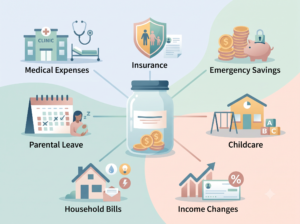
Healthcare and time away from work can affect the budget significantly.
Review:
- Insurance premiums
- Deductibles
- Copayments
- Medical appointments
- Prescription costs
- Hospital expenses
- Travel to healthcare providers
- Parental leave
- Employer benefits
- Government support
- Childcare waiting lists
- Changes in work hours
Rules and benefits vary widely by location and employer. Check official documents rather than relying only on informal advice.
Ask your employer or benefits provider:
- How much paid leave is available?
- When does leave begin?
- How are benefits affected?
- What paperwork is required?
- Can coverage be extended to the child?
- When must the child be added to the policy?
- Are there deadlines for enrollment?
Understanding the process early can prevent avoidable costs and missed deadlines.
Build a Baby Emergency Fund
A baby-related emergency fund is separate from a general shopping budget.
Possible reasons to use it include:
- Unexpected medical costs
- Reduced income
- Emergency transportation
- Urgent home changes
- Additional childcare
- Essential equipment replacement
- Unplanned travel
- Temporary support after birth
You do not need to build a huge fund immediately. Start with a practical target such as:
- $250
- $500
- One month of essential expenses
- The expected cost of a major deductible
- A temporary income gap
The appropriate amount depends on your household’s income, savings, healthcare, job security, and family support.
Keep the money accessible and separate from optional baby spending.
Prioritize Essential Baby Items
The most important products are usually connected to safety, feeding, sleeping, transportation, clothing, hygiene, and medical care.
Before purchasing, ask:
- Is this required for safety?
- Do we already own something that works?
- Can we borrow it?
- Can we buy it used safely?
- Will the baby use it immediately?
- Does it have an expiration date?
- Is it recommended by a qualified professional?
- What is the return policy?
Some items, such as car seats and certain sleep products, require extra caution when buying used because you may not know their history, age, damage, or safety status.
When safety is involved, the lowest price should not be the only consideration.
Buy Slowly Instead of All at Once
Many families buy too much before the baby arrives because they want to feel prepared.
However:
- Babies grow quickly
- Preferences change
- Some products remain unused
- Gifts may cover certain items
- Feeding needs vary
- Storage space may be limited
- Different households need different equipment
Buy confirmed essentials first. Wait on optional products until you know how your household will use them.
This approach protects your budget and prevents clutter.
Use Secondhand and Community Resources
Secondhand items may be appropriate for:
- Clothing
- Books
- Some furniture
- Toys
- Storage
- Maternity clothing
- Strollers, after careful inspection
- Blankets and washable items
Be cautious with products where safety history matters. Check recalls, expiration dates, missing parts, structural condition, and manufacturer instructions.
Community resources may include:
- Parent groups
- Libraries
- Community centers
- Clothing exchanges
- Charities
- Food support
- Local health programs
- Equipment lending
- Family resource centers
Accepting appropriate help is part of financial planning, not a sign of failure.
Plan for Childcare Early
Childcare can become one of the largest ongoing family expenses.
Before the baby arrives, estimate:
- Full-time or part-time care
- Work schedules
- Transportation
- Registration fees
- Deposits
- Holiday closures
- Backup care
- Family availability
- Waiting lists
- Employer support
Compare childcare cost with changes in work hours, transportation, and household income.
Do not assume that one arrangement will work permanently. Work schedules, health, and the child’s needs may change.
Include childcare in the budget before relying on a future income amount.
Review Housing and Transportation
A baby may change how you use your home and transportation, but not every change needs to happen immediately.
Consider:
- Safe sleeping arrangements
- Storage
- Heating and cooling
- Commute
- Vehicle safety
- Parking
- Access to healthcare
- Distance from family support
- Future childcare location
Avoid taking on a larger home or vehicle only because of social pressure. A practical arrangement may be enough for the first stage.
If a move or vehicle change is necessary, include the full cost:
- Deposit
- Moving expenses
- Furniture
- Insurance
- Fuel
- Maintenance
- Registration
- Monthly payment
Use a Month-by-Month Baby Savings Plan
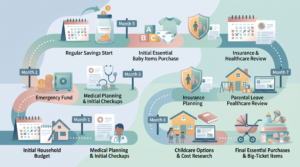
Months 9 to 7 Before Arrival
Focus on:
- Estimating healthcare costs
- Checking insurance and benefits
- Reviewing household income
- Creating a baby savings category
- Researching childcare
- Listing existing debt
- Starting an emergency fund
Months 6 to 4 Before Arrival
Focus on:
- Buying or borrowing confirmed essentials
- Comparing childcare options
- Planning parental leave
- Reviewing housing and transportation
- Reducing unnecessary subscriptions
- Building a medical or deductible reserve
Months 3 to 2 Before Arrival
Focus on:
- Completing essential purchases
- Checking safety items
- Confirming childcare arrangements
- Preparing documents
- Setting aside money for the first weeks
- Planning meals and household support
Final Month
Focus on:
- Keeping cash accessible
- Avoiding unnecessary last-minute purchases
- Confirming insurance enrollment steps
- Reviewing bills and payment dates
- Preparing for possible income changes
- Keeping the emergency fund available
The timeline can be adjusted based on your circumstances. The purpose is to make planning gradual rather than overwhelming.
Prepare for Reduced Income
Parental leave, reduced work hours, job changes, or childcare decisions may affect household income.
Create a temporary reduced-income budget that includes:
- Housing
- Utilities
- Food
- Transportation
- Healthcare
- Debt payments
- Childcare
- Essential baby costs
- Minimum savings
Compare this budget with the income you expect during leave or transition.
If there is a gap, consider:
- Saving before the leave begins
- Reducing optional spending
- Applying for eligible benefits
- Adjusting debt repayment temporarily
- Asking family for practical support
- Negotiating work arrangements
- Delaying nonessential purchases
Do not wait until income changes to discover that the household cannot cover essential bills.
Review Insurance and Beneficiaries
A new baby may change your insurance and estate-planning needs.
Review:
- Health coverage
- Life insurance
- Disability insurance
- Home or renters insurance
- Auto insurance
- Beneficiaries
- Emergency contacts
- Legal documents
Life insurance may be especially important when a child depends on one or both parents’ income. Consider income replacement, housing, childcare, education, debt, and existing resources.
Insurance needs vary by household. Read how much insurance you need for a general framework.
Check the deadlines for adding a child to coverage. Rules differ by policy and location.
A Realistic Baby Savings Example
Suppose a couple has seven months before the baby arrives.
They estimate:
| Category | Estimated Amount |
|---|---|
| Medical and insurance costs | $1,000 |
| Essential equipment | $700 |
| Initial clothing and supplies | $300 |
| Income-gap reserve | $1,400 |
| Emergency buffer | $600 |
| Total | $4,000 |
They already have $1,200 saved, leaving $2,800.
$2,800 ÷ 7 = $400 per month
The amount is higher than they can comfortably save, so they adjust:
- Buy some clothing secondhand
- Borrow selected equipment
- Reduce optional furniture
- Use $300 of existing general savings while preserving an emergency minimum
- Save $300 per month
- Direct confirmed extra income toward the remaining gap
- Review childcare and leave benefits
The goal is not to buy every product. It is to prepare for the most important costs without using unnecessary debt.
Common Baby Budget Mistakes
- Buying everything before the baby arrives: Many products may not be used.
- Ignoring medical and leave costs: Healthcare and income changes can be significant.
- Using all emergency savings: New expenses may appear after birth.
- Choosing products based on social media: Marketing can make optional items feel essential.
- Ignoring childcare waiting lists: Planning late may reduce available choices.
- Forgetting insurance deadlines: Missing enrollment periods can create problems.
- Assuming family help is guaranteed: Count only confirmed support.
- Taking on a larger home or vehicle too quickly: Major payments may create long-term pressure.
- Buying unsafe secondhand items: Check recalls, age, condition, and safety history.
- Failing to update beneficiaries: Family changes may require policy updates.
Frequently Asked Questions
How much money should I save before having a baby?
There is no universal amount. Consider medical costs, income changes, childcare, housing, essential supplies, insurance, and emergency savings. Build a realistic target based on your household.
What baby items should I buy first?
Prioritize confirmed safety, sleeping, transportation, feeding, hygiene, clothing, and medical needs. Delay optional products until you know they are useful.
Can I buy baby items secondhand?
Some items may be suitable if they are clean, complete, and safe. Use extra caution with car seats, sleep products, and items with expiration or recall concerns.
How can I prepare for a lower income during parental leave?
Estimate the reduced income, create a bare-bones budget, build savings beforehand, review benefits, reduce optional expenses, and plan for essential bills.
How much does childcare affect a baby budget?
Childcare costs vary widely by location, schedule, provider, and family support. Research early and include deposits, transportation, closures, and backup care.
Should I open a separate baby savings account?
A separate account or category can make progress easier to track and reduce the chance of spending the money on unrelated expenses.
Should I change insurance before the baby arrives?
Review health, life, disability, home, auto, and beneficiary information. Exact changes depend on the policies and rules where you live.
What if I cannot afford to save much?
Start with the most important expenses, build a small buffer, use eligible community and family resources, review benefits, and avoid unnecessary purchases. A small consistent amount is still useful.
Key Takeaways
- Start with a baby budget rather than buying products immediately.
- Estimate healthcare, leave, childcare, housing, transportation, and essential supply costs.
- Calculate the monthly contribution needed for the remaining amount.
- Build a baby savings fund and protect a separate emergency reserve.
- Prioritize safety and confirmed needs over optional products.
- Buy slowly, borrow where appropriate, and use secondhand items carefully.
- Research childcare and benefits early.
- Review insurance and update beneficiaries after major family changes.
- Prepare for possible income changes before parental leave begins.
- Readers can continue with goal-based saving, saving for a wedding, and what is a sinking fund.
- A broader insurance review is available in how much insurance you need.
Preparing financially for a baby is not about predicting every expense perfectly. It is about creating flexibility, protecting essential needs, and avoiding unnecessary spending driven by pressure or fear.
Start with the numbers you can confirm. Save gradually, ask questions about benefits, accept practical support, and review the budget as your household’s needs become clearer.
This article is for informational purposes only and is not financial advice.
Leave a Reply
You must be logged in to post a comment.