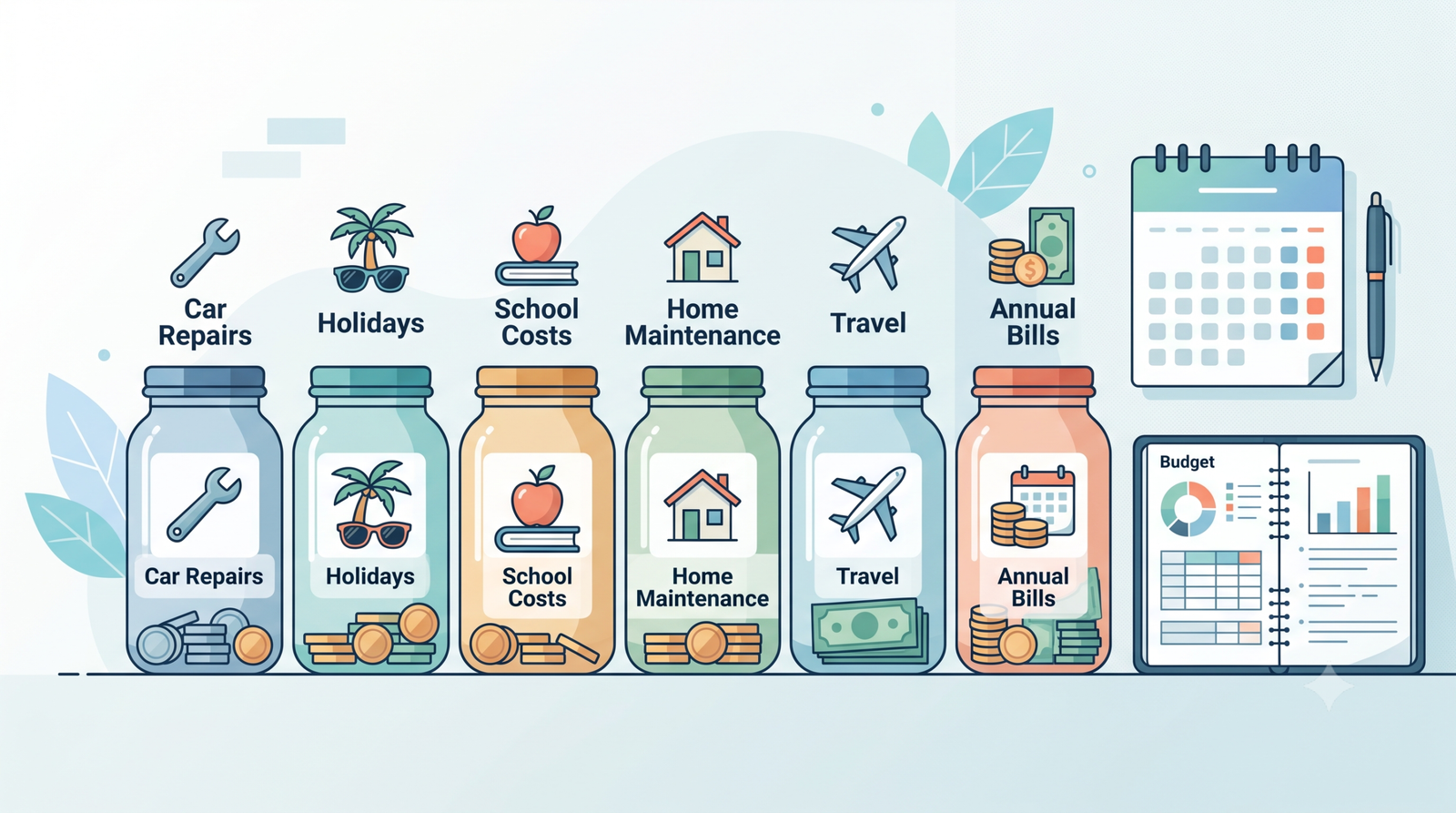
Some expenses are not monthly, but they are still predictable.
You may know that car maintenance, school supplies, annual insurance, holiday gifts, home repairs, or a family trip will eventually cost money. Yet because these expenses do not arrive every month, they can feel like emergencies when the payment is due.
A sinking fund helps you prepare for these costs gradually.
Instead of waiting until an expense arrives, you set aside a small amount regularly. When the bill or purchase becomes necessary, the money is already available.
This guide explains what is a sinking fund, how it differs from an emergency fund, how to choose categories, calculate monthly contributions, organize accounts, and avoid common mistakes.
Sinking funds are also an important part of goal-based saving, especially when you are managing several financial priorities at once.
What Is a Sinking Fund?
A sinking fund is money saved gradually for a known future expense.
The expense may be:
- Annual
- Seasonal
- Occasional
- Predictable
- Planned
- Irregular in timing
Examples include:
- Car repairs
- Insurance renewals
- School supplies
- Holiday gifts
- Birthdays
- Home maintenance
- Medical appointments
- Travel
- Technology replacement
- Professional fees
- Property taxes
- Annual subscriptions
The fund “sinks” money into a specific category over time until the planned expense arrives.
A sinking fund is not necessarily an emergency fund. It is designed for costs you can reasonably anticipate.
Sinking Fund vs Emergency Fund
These two types of savings are often confused.
Emergency Fund
An emergency fund is for unexpected or urgent financial problems.
Examples include:
- Job loss
- Major medical expenses
- Emergency repairs
- Sudden travel
- An unexpected income interruption
Sinking Fund
A sinking fund is for a known future expense.
Examples include:
- Annual insurance
- Holiday gifts
- School fees
- Planned car maintenance
- A wedding
- A vacation
- Home improvements
- A predictable medical cost
The difference is not always whether the expense feels stressful. It is whether you could reasonably predict it.
A car repair may be unexpected in timing but expected as part of owning a vehicle. Creating a vehicle-maintenance sinking fund can reduce the chance that a routine repair becomes a financial emergency.
Why Sinking Funds Work
Sinking funds change the timing of saving.
Without a sinking fund, a $1,200 annual expense may feel like a $1,200 emergency.
With a sinking fund:
$1,200 ÷ 12 months = $100 per month
The same expense becomes a planned monthly contribution.
Sinking funds can help you:
- Avoid high-interest debt
- Reduce financial surprises
- Protect emergency savings
- Smooth irregular costs
- Make annual bills easier to manage
- Plan large purchases
- Reduce stress
- Avoid last-minute decisions
The method does not reduce the total cost by itself. It changes how the cost fits into your budget.
Common Sinking Fund Categories
You do not need a fund for every possible expense. Start with costs that are predictable and financially significant.
Vehicle Fund
Use it for:
- Maintenance
- Tires
- Registration
- Repairs
- Insurance
- Annual inspections
Home Fund
Use it for:
- Repairs
- Appliance replacement
- Maintenance
- Furniture
- Seasonal costs
- Home improvements
Education Fund
Use it for:
- Tuition
- School supplies
- Textbooks
- Uniforms
- Activities
- Technology
Holiday and Gift Fund
Use it for:
- Gifts
- Travel
- Food
- Decorations
- Events
- Seasonal clothing
Medical Fund
Use it for:
- Deductibles
- Prescriptions
- Dental work
- Vision care
- Appointments
- Planned treatment
Travel Fund
Use it for:
- Transportation
- Accommodation
- Meals
- Activities
- Travel insurance
- Spending money
Technology Fund
Use it for:
- Laptop replacement
- Phone replacement
- Repairs
- Software
- Accessories
Baby and Family Fund
Use it for:
- Clothing
- Childcare deposits
- Medical costs
- Equipment
- Family events
The categories should reflect your actual life. A student may need education and travel funds, while a homeowner may need larger maintenance categories.
How to Set Up a Sinking Fund
Step 1: List Predictable Future Expenses
Review the next twelve months and write down costs that do not happen monthly.
Check:
- Bills
- Statements
- School calendars
- Insurance renewals
- Vehicle schedules
- Family events
- Subscription renewals
- Planned travel
- Home maintenance
Step 2: Estimate the Total Cost
Use recent bills, quotes, receipts, or a conservative estimate.
If the cost is uncertain, choose a reasonable target and review it later.
Step 3: Identify the Deadline
Write down when the money will be needed.
A fund for a bill due in three months needs a different contribution from one needed in eighteen months.
Step 4: Subtract What You Already Have
If the goal is $900 and you already have $300, the remaining amount is $600.
Step 5: Divide by the Months Available
Amount remaining ÷ Months available = Monthly contribution
Step 6: Choose Where to Track It
Use:
- Separate savings accounts
- Bank sub-accounts
- A spreadsheet
- Digital envelopes
- A budgeting app
- Physical envelopes for cash-based households
Step 7: Automate the Contribution
Schedule the transfer after receiving income if possible.
Sinking Fund Calculation Examples
Annual Insurance
- Total due: $1,200
- Months available: 12
$1,200 ÷ 12 = $100 per month
Holiday Gifts
- Target: $600
- Current savings: $150
- Remaining: $450
- Months available: 9
$450 ÷ 9 = $50 per month
Car Maintenance
- Annual estimate: $900
- Months available: 12
$900 ÷ 12 = $75 per month
Laptop Replacement
- Target: $1,500
- Current savings: $300
- Remaining: $1,200
- Time available: 20 months
$1,200 ÷ 20 = $60 per month
If the monthly total becomes too large, prioritize the most important categories and extend the timeline for optional goals.
How Many Sinking Funds Should You Have?
There is no perfect number.
Too few categories can make money difficult to track. Too many can make the system complicated and discourage regular use.
A practical starting point may include:
- Annual bills
- Vehicle
- Home
- Education
- Medical
- Holidays
- Technology
Combine categories when appropriate.
For example, you might use one “annual expenses” fund for insurance, subscriptions, and fees instead of creating separate accounts for each bill.
Use separate categories when:
- The expense is large
- The deadline is different
- The money has a specific purpose
- Mixing funds would cause confusion
- The category requires regular tracking
The best system is the one you can understand and maintain.
Where Should You Keep Sinking Fund Money?
The right location depends on the timeline, access needs, local financial options, and applicable fees.
Money needed soon may need to be:
- Accessible
- Stable
- Separate from daily spending
- Protected from unnecessary risk
Before choosing an account, review:
- Interest
- Fees
- Withdrawal rules
- Minimum balances
- Tax treatment where relevant
- Transfer times
- Account access
- Currency or exchange risks
Do not place money needed for a near-term bill in an option that may fall in value or be difficult to access.
A sinking fund is primarily about preparation and organization. A slightly higher return may not be worth losing access when the expense arrives.
Use Sinking Funds With a Variable Income
If your income changes, set a minimum contribution based on your lowest reliable month.
When income is higher, add extra money to the categories that are behind.
For example:
- Minimum vehicle contribution: $50
- Minimum annual-bill contribution: $75
- Extra income assigned to holiday savings
- Bonuses directed toward school expenses
Do not build fixed financial obligations around uncertain income.
If a month is difficult, prioritize:
- Housing and essential bills
- Food and healthcare
- Required debt payments
- Emergency needs
- Most urgent sinking funds
- Optional goals
A missed contribution does not mean the system failed. Recalculate the remaining amount and adjust the deadline if necessary.
Review Sinking Funds Monthly

Each month, review:
- Current balance
- Upcoming deadlines
- Contributions made
- Costs that changed
- Categories that are overfunded
- Categories that are behind
- Whether the target remains realistic
If a car repair costs more than expected, update the fund after the repair.
If a holiday plan becomes less expensive, redirect the extra money to another priority.
A sinking fund should be flexible enough to reflect real costs.
Sinking Funds and Goal-Based Saving
Sinking funds are smaller, time-specific goals within a larger savings plan.
For example, a household may have:
- Emergency fund
- Home down payment
- Wedding fund
- Baby fund
- Car fund
- Annual bills fund
Goal-based saving helps you prioritize major life goals, while sinking funds help you prepare for predictable expenses along the way.
You can combine both systems by:
- Ranking major goals
- Creating separate categories
- Assigning monthly contributions
- Reviewing progress
- Redirecting money after a goal is completed
The method is especially useful when several expenses compete for the same income.
A Realistic Sinking Fund Example
Suppose a household expects the following expenses over the next year:
| Expense | Estimated Cost | Months Available | Monthly Contribution |
|---|---|---|---|
| Vehicle maintenance | $900 | 12 | $75 |
| Insurance renewal | $1,200 | 12 | $100 |
| Holiday gifts | $600 | 10 | $60 |
| School supplies | $360 | 6 | $60 |
| Home repair | $800 | 8 | $100 |
| Total | $3,860 | $395 |
The household needs approximately $395 per month to fully fund every category.
If that amount is too high, it can:
- Prioritize insurance and school supplies
- Reduce the holiday target
- Extend the home repair timeline
- Use existing savings
- Direct extra income toward the categories
- Review whether the repair can be delayed safely
The table makes the pressure visible. Without it, the expenses might arrive as separate surprises throughout the year.
Common Sinking Fund Mistakes
- Saving without a target: A category needs a purpose and deadline.
- Forgetting annual expenses: Bills that happen once a year still need monthly planning.
- Creating too many categories: Complexity can make the system difficult to maintain.
- Using sinking funds for emergencies: Keep a separate emergency reserve where possible.
- Underestimating costs: Use recent prices and include fees.
- Ignoring deadlines: A late start may require larger contributions.
- Using the money for unrelated spending: Clear labels can prevent this.
- Failing to update the target: Costs and plans change.
- Relying on uncertain income: Base regular contributions on reliable money.
- Keeping everything in one untracked account: Money can be spent without realizing its purpose.
Frequently Asked Questions
What is a sinking fund?
A sinking fund is money saved gradually for a known future expense, such as car maintenance, annual insurance, school supplies, holidays, or home repairs.
What is the difference between a sinking fund and an emergency fund?
A sinking fund is for a predictable future cost. An emergency fund is for an unexpected financial problem.
How much should I put into a sinking fund each month?
Divide the amount still needed by the number of months before the expense. Adjust the contribution if the deadline, cost, or income changes.
Where should I keep sinking fund money?
Use an accessible and suitable savings option based on the timeline, fees, rules, and local financial choices. Avoid unnecessary risk for money needed soon.
How many sinking funds should I have?
Start with the categories that create the most financial stress. Combine smaller expenses into broader categories if separate funds become confusing.
Can sinking funds help with debt?
They can help prevent new debt by preparing for predictable expenses. However, required debt payments should remain part of the regular budget.
What if I cannot contribute every month?
Recalculate the remaining amount, use extra income when available, reduce the target, or extend the deadline. A temporary pause does not eliminate the value of the system.
What are common sinking fund examples?
Common examples include vehicle maintenance, annual bills, holidays, birthdays, home repairs, medical costs, education, travel, technology, and baby expenses.
Key Takeaways
- A sinking fund prepares for a predictable future expense through gradual savings.
- It is different from an emergency fund, which is designed for unexpected problems.
- List future costs, estimate the target, identify the deadline, and calculate the monthly contribution.
- Use separate categories or clear tracking to protect the money’s purpose.
- Start with the most important expenses rather than creating too many funds.
- Review costs and deadlines monthly.
- Use sinking funds to avoid high-interest debt and last-minute financial stress.
- Base regular contributions on reliable income.
- Adjust the plan when costs, deadlines, or priorities change.
- Readers can continue with goal-based saving, saving for a down payment, saving for a wedding, and saving money for a baby.
A sinking fund does not make future expenses disappear. It makes them easier to manage by spreading the cost across the months before the bill arrives.
Start with one predictable expense, such as vehicle maintenance or annual insurance. Estimate the total, divide it by the time available, and automate a small contribution. Once the method becomes familiar, add another category.
This article is for informational purposes only and is not financial advice.
Leave a Reply
You must be logged in to post a comment.