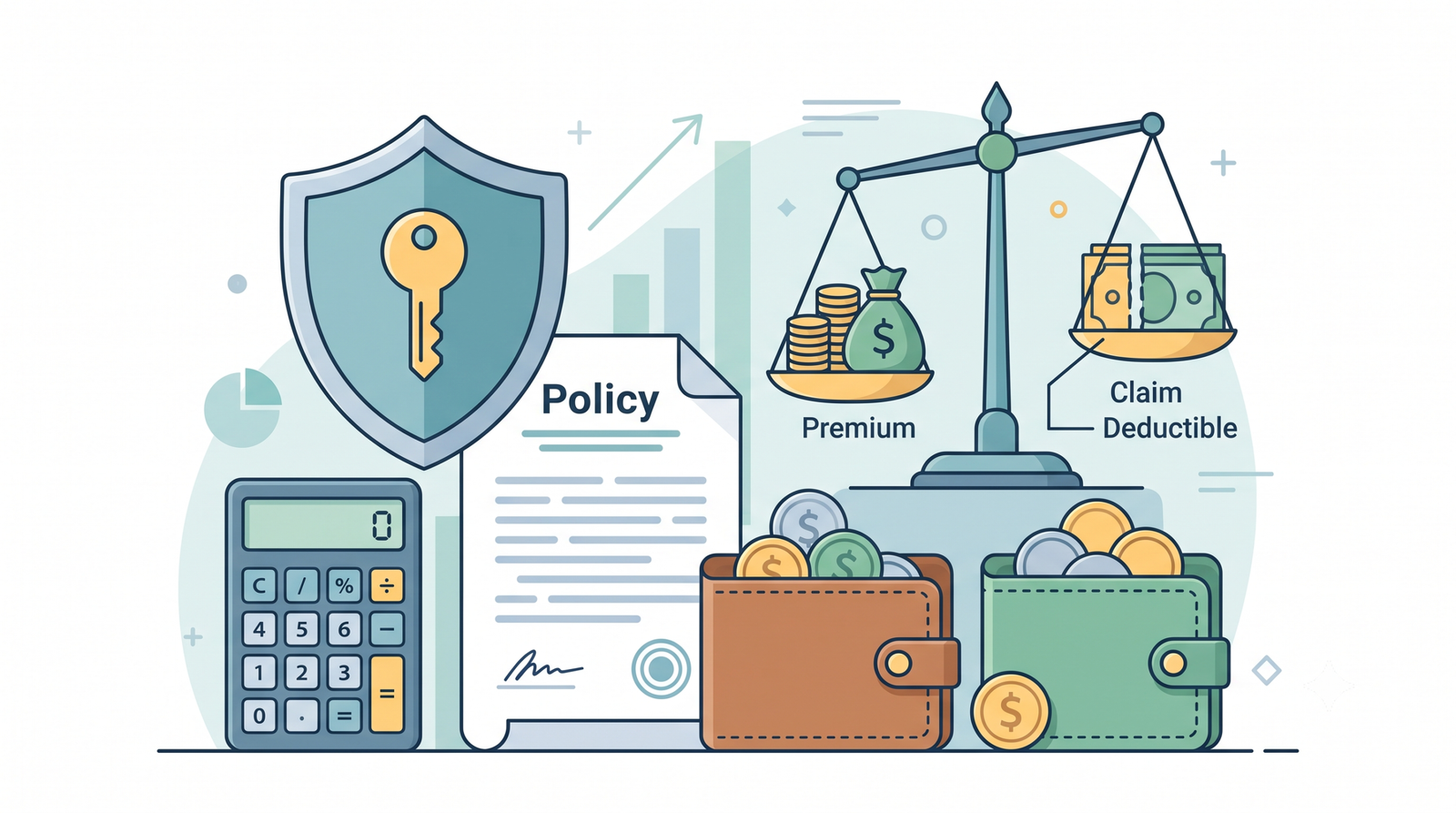
An insurance deductible is one of the most important parts of a policy, but it is also one of the most misunderstood.
You may know that a deductible affects what you pay after a claim, but you may not know:
- When the deductible applies
- Whether it applies once or repeatedly
- Why a higher deductible can lower your premium
- How much money you need available
- Whether different risks have different deductibles
- What happens when the claim is smaller than the deductible
Choosing a deductible is a trade-off. A lower deductible may mean a higher premium, while a higher deductible may reduce the premium but require more money from you after a covered event.
This guide explains how insurance deductibles work, compares high and low deductibles, shows how to choose one based on your emergency savings, and explains common mistakes to avoid.
Insurance terms vary by country, insurer, and policy type. Review the actual policy documents before making a decision.
What Is an Insurance Deductible?
A deductible is the amount you are responsible for paying toward a covered claim before the insurer contributes, subject to the policy terms.
For example, suppose:
- Covered repair: $3,000
- Deductible: $500
If the claim is covered and the policy applies, you may pay the first $500 and the insurer may contribute the remaining eligible amount.
If the covered loss is $400 and the deductible is $500, the claim may not produce a payment because the loss is below the deductible.
A deductible is not the same as:
- A premium
- A copayment
- Coinsurance
- A policy limit
- An exclusion
- A service fee
Each term affects your costs differently.
Premium vs Deductible
A premium is the amount you pay to keep an insurance policy active.
A deductible is the amount you may pay after a covered loss before the insurer contributes.
These costs often move in opposite directions:
- Lower deductible = usually higher premium
- Higher deductible = usually lower premium
The relationship is not always exact, and insurers may price policies differently. Compare the full policy rather than assuming the difference is identical across providers.
When choosing between a high or low deductible, ask:
Would I rather pay more regularly through the premium, or accept more responsibility if a claim occurs?
The answer depends on your cash savings, income stability, risk, and ability to handle an unexpected bill.
How a Deductible Works in Different Policies
Auto Insurance
A deductible may apply to collision or comprehensive claims.
Examples include:
- Damage after an accident
- Theft
- Hail damage
- Falling objects
- Vandalism
- Animal collisions
Liability coverage may work differently because it protects against damage or injury you cause to others. The policy terms determine which coverage has a deductible.
Homeowners Insurance
A deductible may apply to covered damage to the home or belongings.
Some policies have:
- Standard deductibles
- Separate wind or storm deductibles
- Percentage-based deductibles
- Special deductibles for certain risks
A percentage deductible can be much larger than a fixed dollar amount if the home’s insured value is high.
Renters Insurance
A deductible may apply to covered losses involving personal belongings. The building itself is generally the landlord’s responsibility, but the exact arrangement depends on the lease and policy.
Health Insurance
Health policies may use deductibles alongside:
- Premiums
- Copayments
- Coinsurance
- Out-of-pocket maximums
- Network rules
A health deductible may apply annually, but the policy document explains which services are subject to it.
Travel Insurance
Travel policies may have deductibles for certain covered claims. Check whether the deductible applies per claim, per person, or per incident.
Do not assume that a deductible works identically across all policies.
High Deductible vs Low Deductible
Lower Deductible
A lower deductible may suit someone who:
- Has limited emergency savings
- Wants more predictable claim costs
- Faces a higher chance of filing a claim
- Would struggle to pay a large bill
- Prefers a higher regular premium
The trade-off is that the policy may cost more each month or year.
Higher Deductible
A higher deductible may suit someone who:
- Has enough emergency savings
- Can comfortably pay the deductible
- Wants a lower premium
- Has a lower likelihood of making small claims
- Is comfortable accepting more financial responsibility
The trade-off is that a claim may create a large immediate expense.
A high deductible is not automatically a better deal. It is only useful when the household can handle the potential cost.
How to Choose a Deductible You Can Afford
Review your emergency savings and ask:
- How much cash is immediately available?
- How much is needed for rent, food, and bills?
- Could I pay the deductible without using expensive debt?
- Would paying it empty my emergency fund?
- Is the premium savings worth the added risk?
- Could I pay more than one deductible if multiple events occurred?
Do not count money that is unavailable, locked into a long-term account, or needed for another urgent obligation.
For example, if your deductible is $2,000 but you have only $1,200 available after essential expenses, the policy may leave you financially exposed even if the premium is affordable.
A reasonable deductible should fit your actual cash position, not your expected future income.
Compare the Annual Cost Difference
Suppose two policies offer the following options:
| Option | Annual Premium | Deductible |
|---|---|---|
| Plan A | $1,200 | $500 |
| Plan B | $900 | $1,500 |
Plan B saves $300 per year in premiums but requires you to accept an additional $1,000 of claim responsibility.
The right choice depends on:
- How likely a claim is
- Whether you can pay $1,500
- How long you expect to keep the policy
- Whether the savings will actually be preserved
- Whether other policy terms are equal
If you choose the higher deductible, consider setting aside the premium savings in a dedicated reserve. After several years, that reserve may help cover the deductible.
This is not a guarantee that the higher deductible is financially better. It is a way to make the trade-off more deliberate.
Understand When the Deductible Applies
Read the policy carefully because deductibles may apply:
- Per claim
- Per incident
- Per person
- Per vehicle
- Per policy year
- Per covered category
- As a percentage of insured value
For example, a policy may have a standard deductible for most claims and a separate percentage deductible for a specific natural disaster.
Ask the insurer:
- What is the exact deductible?
- When does it apply?
- Is it charged once or more than once?
- Are there different deductibles for different risks?
- Does the deductible apply before or after other cost-sharing?
- What happens if the claim is below the deductible?
The answer should be clear before purchasing the policy.
When Is a Claim Worth Making?
A deductible affects whether a claim may be financially useful.
Suppose:
- Repair cost: $800
- Deductible: $750
The potential insurance contribution may be small, and filing a claim may have other consequences depending on the policy and insurer.
However, do not avoid reporting a serious loss simply because you are worried about a premium increase. The correct decision depends on the policy, the type of loss, legal requirements, and your circumstances.
Ask the insurer about:
- Reporting deadlines
- Whether an inquiry is recorded
- Claim effects
- Documentation
- Temporary protection
- Available repair options
Do not make a claim decision based only on assumptions.
Deductibles and Emergency Funds
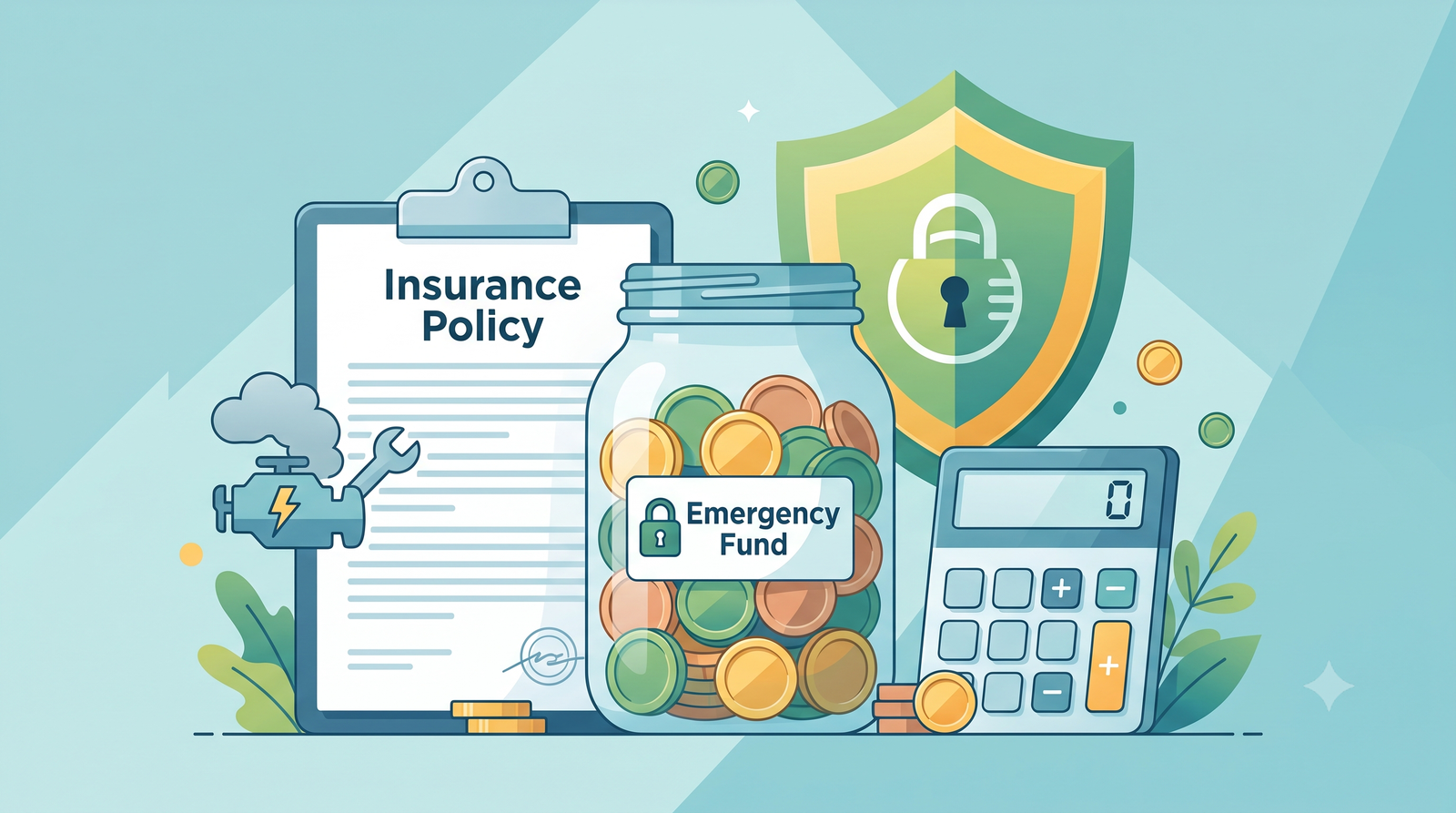

Your deductible and emergency fund should be considered together.
If you choose a $1,000 deductible, your emergency plan should include a realistic way to access $1,000 if a covered event occurs.
You may use:
- A dedicated emergency account
- A general savings fund
- A household reserve
- A separate sinking fund
- A planned contribution from future income
Avoid relying on:
- High-interest credit cards
- Payday loans
- Uncertain financial help
- Selling essential assets quickly
- Money needed for rent or healthcare
If the deductible is not affordable, consider whether a lower deductible or different policy would better protect your household.
Common Deductible Mistakes
- Choosing only by premium: A lower premium may create a deductible you cannot pay.
- Ignoring percentage deductibles: A percentage can represent a large amount.
- Assuming every policy uses the same deductible: Auto, home, health, and travel policies differ.
- Not reading exclusions: A deductible does not make an excluded event covered.
- Using all emergency savings elsewhere: Keep enough available for the deductible.
- Forgetting multiple deductibles: Several claims or categories may involve separate costs.
- Assuming a claim always pays: If the loss is below the deductible, the insurer may not contribute.
- Comparing policies with different limits: A lower price may reflect weaker protection.
- Changing the deductible without checking the full policy: Other terms may change too.
- Using borrowed money as the plan: A deductible should not automatically create expensive debt.
A Realistic Deductible Example
A household is comparing two home insurance options:
- Option A: $1,300 annual premium with a $500 deductible
- Option B: $1,000 annual premium with a $1,500 deductible
The household has $3,000 in emergency savings, but $2,000 is reserved for upcoming school and medical expenses. Only $1,000 is realistically available.
Although Option B is cheaper, the $1,500 deductible would create a problem if a claim happened soon. The household may choose Option A or look for another policy with a lower premium and affordable deductible.
If the household later builds a larger emergency reserve, it can review the decision again.
The best option is not determined by the premium alone. It depends on cash availability, coverage terms, risks, and the household’s ability to absorb the loss.
Frequently Asked Questions
What is an insurance deductible?
A deductible is the amount you may need to pay toward a covered claim before the insurer contributes, subject to the policy terms.
Is a high or low deductible better?
Neither is automatically better. A low deductible usually costs more in premiums, while a high deductible may reduce premiums but require more money after a claim.
What deductible can I afford?
Choose a deductible you could pay without missing essential bills, emptying necessary savings, or using expensive debt.
Does a deductible apply to every claim?
It depends on the policy. Some apply per claim, while others apply per incident, person, vehicle, policy year, or specific category.
Can I change my deductible later?
Many policies allow changes at renewal, but the rules vary. Ask the insurer whether changing it affects premiums, coverage, or eligibility.
Does the deductible apply to liability coverage?
Not always. Liability coverage often works differently from collision, property, or damage coverage. Read the specific policy terms.
Should I file a claim smaller than my deductible?
If the loss is below the deductible, the insurer may not pay. For other claims, consider reporting requirements and ask the insurer how the claim may affect your policy.
How does a deductible affect health insurance?
Health plans may use deductibles alongside premiums, copayments, coinsurance, and out-of-pocket maximums. Review the full plan rather than focusing on the deductible alone.
Key Takeaways
- A deductible is the amount you may pay toward a covered claim before insurance contributes.
- Lower deductibles usually come with higher premiums, while higher deductibles may reduce premiums.
- Choose a deductible that matches your emergency savings and income stability.
- A deductible can apply differently across auto, home, renters, health, and travel policies.
- Percentage-based deductibles can be much larger than fixed-dollar deductibles.
- Compare the total annual premium and potential claim cost.
- Keep enough accessible savings to cover the deductible if a covered event occurs.
- Read exclusions, limits, and claim rules before assuming protection exists.
- A lower monthly price is not automatically the better policy.
- Readers can continue with how much insurance you need, signs you may be underinsured, and why insurance premiums increase.
Choosing an insurance deductible is a decision about risk. You are deciding how much cost to handle yourself and how much to transfer to the insurer through a higher premium.
Review the complete policy, compare the numbers, and choose a deductible that you could realistically afford after an unexpected event. The right option is the one that balances ongoing cost with practical financial protection.
This article is for informational purposes only and is not insurance advice.
Leave a Reply
You must be logged in to post a comment.