
Having an insurance policy does not always mean you have enough protection.
You may pay premiums every month and assume you are covered, but the policy may contain limits, exclusions, deductibles, or conditions that leave important gaps.
Underinsurance happens when your coverage is not enough to handle a significant loss. It may occur because your circumstances changed, property values increased, your income grew, or you chose a low-cost policy without reviewing what it actually covered.
Common examples include:
- A home insured for less than its rebuilding cost
- A life insurance policy that would not replace enough income
- A health policy with unaffordable out-of-pocket costs
- Auto liability limits that are too low for a serious accident
- Personal belongings that were never properly valued
- A disability policy that would not cover essential expenses
This guide explains the most common signs you are underinsured, how to identify coverage gaps, and what questions to ask before changing a policy.
Insurance rules and policy terms vary by country, state, province, insurer, and product. This article is general education rather than a personalized insurance recommendation.
What Does It Mean to Be Underinsured?
Being underinsured means your policy may not provide enough financial protection for a covered loss.
This can happen in several ways:
- The coverage limit is too low
- The deductible is unaffordable
- An important risk is excluded
- Your policy information is outdated
- Your belongings are worth more than the limit
- Your income or family responsibilities changed
- You have no coverage for a major financial risk
- You misunderstood what the policy covers
A policy can be valid and active while still being insufficient.
For example, a homeowner may have insurance but not enough coverage to rebuild after a major event. A driver may be legally insured but have liability limits that would not cover a serious accident.
Underinsurance is different from not having insurance at all. It is more difficult to notice because the policy exists and the premiums are being paid.
Sign 1: Your Life Has Changed but Your Policy Has Not
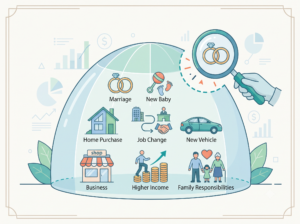
Review your insurance after major life changes such as:
- Marriage
- Divorce
- Birth or adoption of a child
- Buying a home
- Renting a new property
- Starting a business
- Changing jobs
- Becoming self-employed
- Taking on a major loan
- Buying a new vehicle
- Receiving an inheritance
- Supporting a dependent relative
Your original policy may have been suitable when your responsibilities were different.
For example, a person with no dependents may have had limited life insurance needs. After having children, the financial consequences of losing income may be much larger.
A person who worked for an employer may have had disability or life benefits. After becoming self-employed, those benefits may disappear.
Update your policy information when your household changes rather than waiting until renewal.
Sign 2: Your Home Coverage Is Based on an Old Estimate
Homeowners should understand the difference between:
- Market value
- Purchase price
- Mortgage balance
- Rebuilding cost
- Value of belongings
- Liability protection
The cost to rebuild a home may change because of:
- Construction labor
- Material prices
- Building codes
- Local demand
- Supply shortages
- Demolition and debris removal
- Special features
- Higher replacement costs
A policy based on an old estimate may no longer provide enough coverage.
Ask your insurer how the rebuilding amount is calculated and whether the policy includes features such as:
- Extended replacement cost
- Guaranteed replacement cost
- Inflation adjustments
- Ordinance or code coverage
- Debris removal
- Temporary accommodation
These features vary by policy and location. Read the wording carefully.
Sign 3: You Have Never Created a Home Inventory
Many people underestimate the value of their belongings.
Add up the replacement cost of:
- Furniture
- Clothing
- Electronics
- Kitchen equipment
- Tools
- Jewelry
- Musical instruments
- Computers
- Collectibles
- Sports equipment
- Children’s items
Create a home inventory using:
- Photographs
- Receipts
- Serial numbers
- Purchase records
- Video walkthroughs
- A secure digital list
Keep the inventory somewhere safe, not only inside the home.
Check special limits for jewelry, cash, collectibles, electronics, business equipment, and other high-value items. A standard policy may not cover the full value of certain categories without additional protection.
Sign 4: Your Auto Liability Limits Are Minimal
Auto liability coverage helps protect you when you are responsible for injury or damage to another person.
A serious accident may involve:
- Medical treatment
- Lost income
- Property damage
- Legal fees
- Rehabilitation
- Long-term care
- Compensation claims
Minimum legal coverage may not equal adequate financial protection.
Review:
- Bodily injury limits
- Property damage limits
- Uninsured or underinsured driver protection
- Medical coverage
- Collision coverage
- Comprehensive coverage
- Personal belongings
- Rental vehicle coverage
If you own significant assets or have a high income, a serious liability claim may create more financial exposure.
Do not increase coverage blindly. Ask what each limit means, what it protects, and how it interacts with other policies.
Sign 5: Your Life Insurance Would Not Cover Your Family’s Needs
Life insurance needs are connected to the financial support other people would lose after your death.
Consider:
- Replacement income
- Housing costs
- Childcare
- Education
- Debt
- Funeral expenses
- Existing savings
- Other income
- Employer benefits
- Support for dependents with special needs
A small policy may cover funeral costs but leave dependents without enough income replacement.
Review whether your policy still reflects:
- Current income
- Number of dependents
- Housing obligations
- Inflation
- Future education costs
- Changes in your partner’s income
- Employer coverage
Employer-provided life insurance may be useful, but check whether it continues if you change jobs and whether the amount is sufficient.
Sign 6: Your Disability Coverage Would Not Cover Essential Costs
Income is often one of a household’s most important financial assets.
If illness or injury prevents you from working, ask:
- How long would savings last?
- What bills would continue?
- Does your employer provide benefits?
- How long is the waiting period?
- How long would benefits continue?
- What definition of disability applies?
- Are benefits taxable?
- Are there exclusions?
- Would the benefit cover only part of your income?
A policy that replaces a percentage of income may still leave a gap if your essential expenses are high.
Review disability coverage after changing jobs, becoming self-employed, increasing income, or taking on new household responsibilities.
Sign 7: Your Deductible Is Larger Than Your Emergency Savings
A deductible is the amount you may need to pay before insurance contributes to a covered claim.
A high deductible may lower the premium, but it can create a serious problem if you do not have enough savings to pay it.
Ask:
- How much is the deductible?
- Could I pay it today?
- Would paying it require credit card debt?
- Is the premium saving worth the additional risk?
- Does the deductible apply per event or per year?
- Are there separate deductibles for certain risks?
A deductible should fit your financial capacity, not only your desire for a lower monthly payment.
For more information, see how insurance deductibles work.
Sign 8: Important Risks Are Excluded
Policies usually include exclusions and limitations.
Examples may include:
- Flood
- Earthquake
- Certain storm damage
- Mold
- Wear and tear
- Business use
- Personal property outside the home
- Certain medical treatment
- Pre-existing conditions
- High-risk activities
- Commercial activity
- Unlicensed drivers
Do not assume that a general policy covers every event.
Read the exclusions section and ask the insurer:
What significant events are not covered under this policy?
This question can reveal gaps that are not obvious from the premium or policy title.
If you live in an area exposed to a specific risk, investigate whether separate coverage is available or required.
Sign 9: You Are Relying on Another Policy Without Checking
You may assume you are protected through:
- An employer
- A spouse
- A landlord
- A credit card
- A professional association
- A government program
- A parent’s policy
- Another insurance provider
However, the coverage may be:
- Limited
- Temporary
- Conditional
- Available only in certain situations
- Too small for your needs
- Lost after a job or relationship change
Obtain the actual terms rather than relying on a verbal explanation.
Check:
- Limits
- Beneficiaries
- Covered events
- Exclusions
- Eligibility
- Renewal terms
- What happens when circumstances change
Overlapping assumptions can create a false sense of security.
Sign 10: You Have Not Reviewed Your Policy in Several Years
Insurance needs should be reviewed periodically, especially after major changes.
A review can identify:
- Outdated personal information
- Wrong vehicle use
- Incorrect mileage
- Missing household members
- Unlisted renovations
- New valuables
- Changed beneficiaries
- Outdated income
- Expired discounts
- Coverage limits that no longer fit
The review does not always mean buying more insurance. You may discover that some coverage is no longer necessary or that another policy provides similar protection.
The purpose is accuracy.
How to Check for Coverage Gaps

Use this review process:
Step 1: List Your Major Financial Risks
Consider home, auto, health, income, dependents, debt, and liability.
Step 2: Collect Current Policy Documents
Do not rely only on the renewal notice. Review limits, deductibles, exclusions, and conditions.
Step 3: Compare Coverage With Current Responsibilities
Check whether your income, assets, family, and property have changed.
Step 4: Identify the Largest Possible Gaps
Focus first on losses that could create serious financial hardship.
Step 5: Ask Specific Questions
Ask what is covered, excluded, limited, or subject to a separate deductible.
Step 6: Compare Options Carefully
Compare the total premium, limits, exclusions, deductibles, and claims process.
Step 7: Document the Changes
Keep updated policy documents, inventories, beneficiary information, and contact details.
A Realistic Underinsurance Example
Consider a homeowner whose policy was purchased five years ago.
Since then:
- Construction costs increased
- The homeowner renovated the kitchen
- New electronics and furniture were purchased
- A home office was created
- The policy limits were never reviewed
The policy is still active, but the rebuilding estimate and personal-property coverage may no longer match the household’s needs.
The homeowner reviews:
- Rebuilding cost
- Renovation details
- Home inventory
- Business equipment
- Deductible
- Liability limit
- Additional risks in the area
The result may be a higher premium, a different deductible, additional coverage, or confirmation that the existing policy is sufficient.
The important point is that the homeowner discovered the gap before a claim occurred.
Common Mistakes When Reviewing Insurance
- Focusing only on the premium: A low price may come with low limits or major exclusions.
- Using market value as rebuilding cost: These are not always the same.
- Ignoring home improvements: Renovations can change replacement costs.
- Choosing a deductible you cannot afford: A claim may create new debt.
- Assuming employer benefits are permanent: Coverage may end after leaving employment.
- Failing to update beneficiaries: Life changes can make old choices unsuitable.
- Ignoring liability protection: Damage to others can create large claims.
- Assuming all natural disasters are included: Some risks require separate coverage.
- Skipping the home inventory: You may struggle to prove the value of belongings.
- Waiting until after a loss: Review coverage before an emergency occurs.
Frequently Asked Questions
What are the main signs that I am underinsured?
Common signs include outdated coverage, low limits, an unaffordable deductible, missing protection for major risks, changing family responsibilities, and relying on employer or other coverage without checking the terms.
How often should I review my insurance?
Review it at least annually and whenever you marry, have a child, buy property, change jobs, start a business, take on debt, or purchase valuable items.
Can I be underinsured even if I have a policy?
Yes. A policy may have limits, exclusions, or deductibles that leave you responsible for a large part of a loss.
Is a higher insurance limit always better?
Not necessarily. Higher limits may provide more protection but also increase premiums. The goal is suitable protection for your actual risks and responsibilities.
What should I do if my deductible is too high?
Compare the cost of lowering the deductible with the additional premium. Do not choose a deductible you could not reasonably pay after a covered event.
Does renters insurance cover all my belongings?
Coverage depends on the policy limits, exclusions, special item limits, and whether replacement-cost or actual-cash-value rules apply. Create an inventory and review the terms.
Is employer insurance enough?
It may not be. Check the amount, eligibility, beneficiaries, exclusions, and whether coverage continues after leaving the employer.
Can I lower my premium without becoming underinsured?
You may compare providers, ask about discounts, adjust unnecessary coverage, review deductibles, and update inaccurate information. Avoid reducing important protection without understanding the risk.
Key Takeaways
- Having an active policy does not guarantee that you have enough coverage.
- Life changes, inflation, new assets, and higher responsibilities can create gaps.
- Review limits, deductibles, exclusions, beneficiaries, and policy conditions.
- Create a home inventory and keep it updated.
- Consider liability, income replacement, dependents, property, health, and debt risks.
- Do not rely on employer or other coverage without checking its actual terms.
- Choose deductibles that match your emergency savings.
- Ask what important risks are excluded from each policy.
- Review insurance at least annually and after major life changes.
- Readers can continue with how much insurance you need, how insurance deductibles work, and how to bundle insurance policies.
Underinsurance is often discovered only after a loss, when changing the policy is too late for that event. A short review today can help you identify gaps before they become expensive surprises.
You do not need to buy every available type of coverage. Focus on the risks that could seriously affect your household, understand the policy terms, and choose protection that matches your actual financial situation.
This article is for informational purposes only and is not insurance advice.
Leave a Reply
You must be logged in to post a comment.