
Bundling insurance policies means purchasing more than one type of coverage from the same provider.
A common example is combining:
- Home and auto insurance
- Renters and auto insurance
- Home and life insurance
- Business and personal coverage
- Multiple vehicles under one provider
Insurance companies may offer a multi-policy discount when you purchase several policies together. Bundling may also simplify payments, documents, renewals, and communication.
However, bundling is not automatically the cheapest or best option. A provider may offer a discount on one policy while charging more for another. The combined price may look attractive until you compare the limits, deductibles, exclusions, and service quality with separate policies.
This guide explains how to bundle insurance policies, how multi-policy discounts work, what coverage to compare, when bundling may help, and when separate providers may be better.
Insurance pricing and rules vary by location and insurer. Review your actual policy documents and ask the provider for written details before changing coverage.
What Does Insurance Bundling Mean?
Insurance bundling means buying two or more policies from the same insurance company or related provider.
Examples include:
- Home and auto
- Renters and auto
- Home and umbrella liability
- Life and disability
- Multiple vehicles
- Personal and business policies
The policies may remain separate contracts even when they are bundled. Each policy can still have its own:
- Premium
- Deductible
- Limits
- Exclusions
- Renewal date
- Claim process
- Eligibility rules
Bundling does not mean that one policy automatically covers every risk. It is a purchasing and management arrangement, not a replacement for reading the individual contracts.
How Multi-Policy Discounts Work
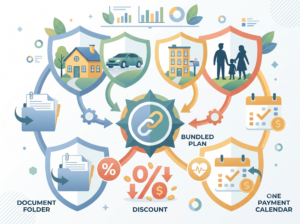
An insurer may offer a discount when you purchase multiple policies.
The discount may apply to:
- One policy
- Several policies
- The total package
- A specific combination
- A limited promotional period
Ask:
- What is the discount percentage or amount?
- Is the discount permanent or temporary?
- Which policy receives the discount?
- Does the discount change at renewal?
- What happens if one policy is canceled?
- Are there additional fees?
- Is the bundled total cheaper than separate policies?
Do not calculate the benefit using the discount alone. Compare the final annual cost of the complete package.
A 15% discount on an expensive policy may still cost more than a lower-priced separate policy.
Potential Benefits of Bundling
Lower Total Premium
Bundling may reduce the combined price, especially when the provider offers a meaningful multi-policy discount.
Simpler Payments
One provider may make it easier to:
- Pay bills
- Update personal information
- Track renewal dates
- Access policy documents
- Contact customer service
Fewer Administrative Tasks
Managing multiple policies through one account may reduce paperwork and forgotten payment dates.
Easier Household Updates
If you move, marry, add a driver, or change vehicles, one provider may make it easier to update several policies.
Possible Loyalty Benefits
Some providers offer additional discounts or benefits to customers with multiple policies. Ask for the exact terms rather than assuming they apply.
Centralized Claims Communication
Some households prefer dealing with one company, although separate policies may still have different claims departments and processes.
Convenience has value, especially when a household is managing several policies and responsibilities.
Potential Disadvantages of Bundling
One Provider May Not Be Best for Every Policy
A company that offers competitive auto insurance may not offer the most suitable home, renters, life, or business policy.
Discounts Can Hide a Higher Base Price
The provider may advertise a bundle discount while starting with higher prices than competitors.
Leaving One Policy May Affect Others
If the discount depends on maintaining multiple policies, canceling one may increase the price of the remaining policies.
Claims Can Affect the Relationship
A claim on one policy may affect future pricing, eligibility, or the overall customer relationship, depending on the provider and local rules.
Coverage May Not Match Your Needs
A bundle can make people feel protected without confirming limits, exclusions, or deductibles.
Switching Becomes More Complicated
Moving several policies at once may create paperwork, cancellation issues, and risk of a coverage gap.
Bundling is a tool, not a guarantee of better value.
Compare Bundled and Separate Policies
Before accepting a bundle, create a comparison table.
| Policy | Current Provider | Bundled Cost | Separate Quote | Deductible | Key Coverage |
|---|---|---|---|---|---|
| Auto | |||||
| Home or renters | |||||
| Life | |||||
| Other |
Compare:
- Total annual premium
- Monthly payment
- Deductibles
- Liability limits
- Property limits
- Exclusions
- Optional benefits
- Claims service
- Renewal terms
- Cancellation fees
- Financial stability where relevant
The goal is to compare similar protection. A cheaper quote is not useful if it provides lower limits or excludes an important risk.
When Bundling May Make Sense
Bundling may be worth considering when:
- The total price is genuinely lower
- Coverage is comparable or better
- Payment management would be easier
- The provider has a good claims reputation
- The policies fit your household’s needs
- The discount is clearly explained
- There are no major cancellation penalties
- You understand how one policy affects the others
For example, a renter with auto insurance may find that combining renters and auto coverage lowers the total cost while making payments easier.
A homeowner with multiple vehicles may also find value in managing home and auto policies through one provider.
The decision depends on the complete comparison rather than the existence of a discount.
When Separate Policies May Be Better
Separate providers may be more suitable when:
- One insurer is much more competitive for a specific policy
- A specialist provider offers better protection
- The bundle has restrictive exclusions
- The discount is very small
- Customer service is poor
- You need unusual coverage
- Your business or property has special risks
- Separate policies provide better limits or deductibles
For example, a homeowner may prefer one company for property insurance and another for a specialized business policy.
There is no requirement that every insurance policy come from one provider. The right arrangement is the one that gives suitable protection at a manageable total cost.
How to Bundle Policies Step by Step
Step 1: List Your Existing Policies
Write down:
- Policy type
- Provider
- Premium
- Deductible
- Coverage limits
- Renewal date
- Cancellation terms
Step 2: Identify the Coverage You Actually Need
Use the framework in how much insurance do I need. Do not add a policy simply because it is included in a bundle.
Step 3: Request a Detailed Bundle Quote
Ask for the price of each policy before and after the discount.
Step 4: Request Separate Quotes
Compare the same limits, deductibles, and optional features from other providers.
Step 5: Review Exclusions
Check what the policies do not cover. Important risks may require separate protection.
Step 6: Confirm Discount Terms
Ask what happens if you cancel one policy, change your address, add a driver, or file a claim.
Step 7: Avoid a Coverage Gap
Do not cancel existing policies until new coverage is confirmed in writing.
Questions to Ask Before Bundling
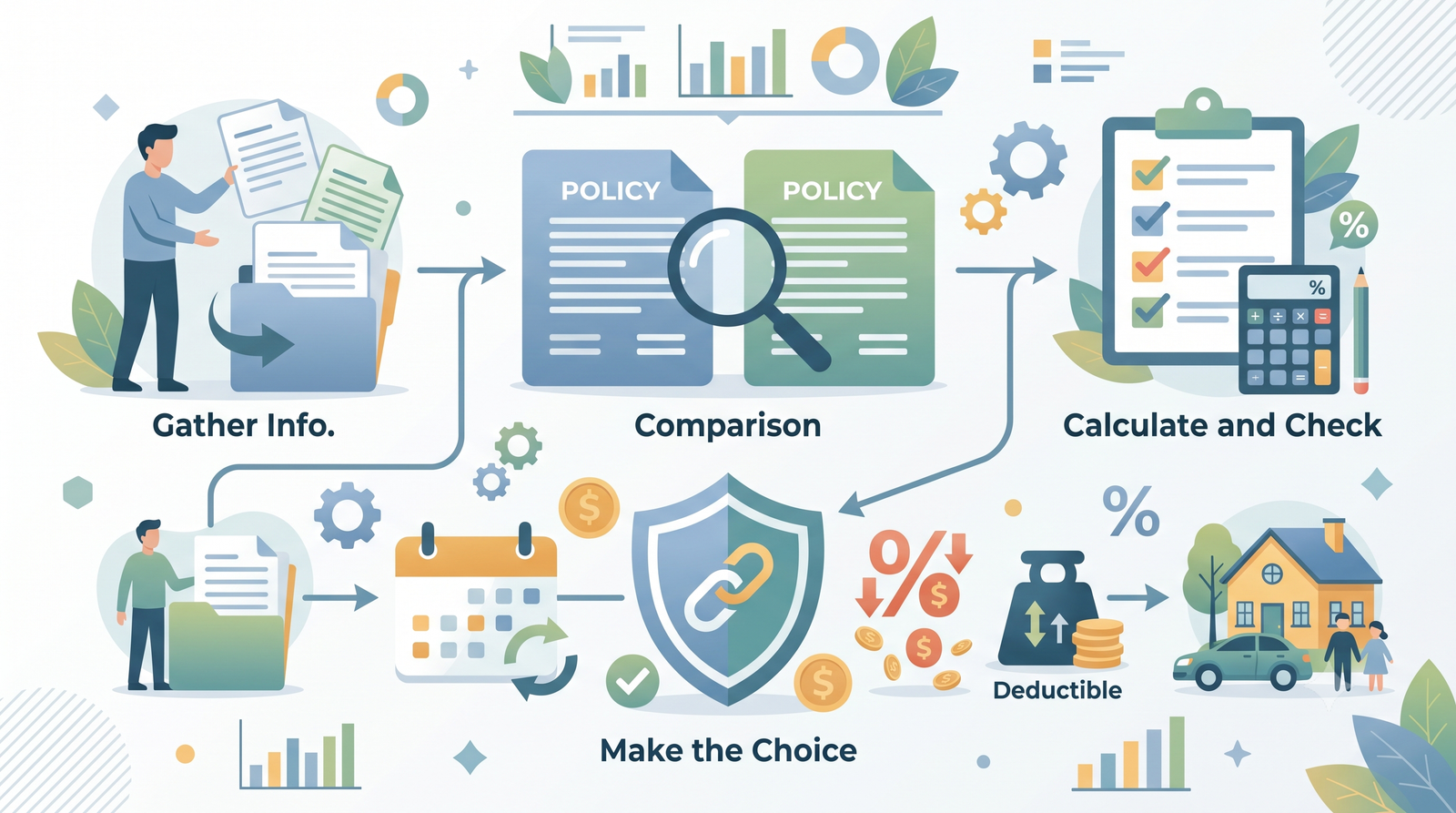

Ask the provider:
- What is the total annual cost?
- How much is the actual multi-policy discount?
- Which policy receives the discount?
- Is the discount permanent?
- What happens if I remove one policy?
- Are there separate deductibles?
- Are limits and exclusions unchanged?
- Are there policy fees?
- Can I pay annually or monthly?
- What are the renewal terms?
- How are claims handled?
- Can I receive all documents in writing?
Ask for a quote that clearly lists each policy separately. A single combined price can make comparison difficult.
A Realistic Bundling Example
Suppose a household currently pays:
- Auto insurance: $1,400 annually
- Home insurance: $1,300 annually
- Total separate cost: $2,700
A provider offers a bundle for $2,450, appearing to save $250.
Before accepting, the household compares the policies and discovers:
- The bundled home deductible is higher
- Property coverage is lower
- Auto liability limits are different
- The discount is promotional for only one year
- A separate provider offers home coverage for $1,150 with similar protection
The household compares alternatives:
- Bundled total: $2,450
- Separate auto: $1,400
- Separate home: $1,150
- Separate total: $2,550
The bundle is still cheaper by $100, but the household must decide whether the higher deductible and lower property limit are acceptable.
The correct decision depends on risk, savings, and priorities. A discount should not automatically outweigh weaker protection.
Bundling and Underinsurance
A bundle can make insurance feel simpler, but simplicity should not replace an annual coverage review.
Check whether:
- Home rebuilding costs are current
- Your property inventory is updated
- Auto liability limits remain suitable
- New drivers are listed
- Life insurance reflects family responsibilities
- Business equipment is covered
- Deductibles remain affordable
- New risks are excluded
If a bundle makes it harder to understand individual policies, request separate documents and explanations.
The signs discussed in how to know if you are underinsured still apply even when all policies come from one provider.
Common Bundling Mistakes
- Assuming a bundle is automatically cheaper: Compare the complete annual cost.
- Comparing different coverage: Match limits, deductibles, and exclusions.
- Ignoring promotional pricing: Discounts may expire.
- Failing to ask what happens after cancellation: Remaining premiums may rise.
- Choosing convenience over protection: Easy payment management does not replace suitable coverage.
- Overlooking separate deductibles: Each policy may have its own claim costs.
- Canceling before new coverage starts: Avoid gaps.
- Adding unnecessary policies: Only insure risks that matter to your situation.
- Ignoring specialist providers: Unique risks may need specialized coverage.
- Not reviewing annually: Your home, family, vehicles, and income can change.
Frequently Asked Questions
What does it mean to bundle insurance policies?
Bundling means purchasing two or more insurance policies from the same provider, often in exchange for a multi-policy discount or simpler management.
Is bundling insurance always cheaper?
No. Compare the total cost, coverage limits, deductibles, exclusions, fees, and renewal terms with separate policies.
What insurance policies can usually be bundled?
Common combinations include home and auto, renters and auto, multiple vehicles, and sometimes life, business, or umbrella coverage. Available combinations vary by provider.
Can bundling reduce insurance coverage?
It can if you accept lower limits, higher deductibles, or additional exclusions without noticing. Review each policy separately.
What happens if I cancel one bundled policy?
The provider may remove or reduce the discount on the remaining policies. Ask for the new prices before canceling.
Should I bundle home and auto insurance?
It may be useful if the total price and coverage are competitive. Compare both policies with separate quotes before deciding.
Can I bundle policies from different companies?
A true multi-policy discount generally requires policies with the same provider or related provider. You can still manage different policies separately if that offers better value.
How often should I review a bundled policy?
Review it at renewal and after moving, buying a vehicle, changing jobs, adding household members, starting a business, or experiencing a major financial change.
Key Takeaways
- Bundling means purchasing multiple insurance policies from one provider.
- Bundling may lower the total cost and simplify payments, but it is not automatically the best option.
- Compare the final annual cost rather than the advertised discount.
- Match coverage limits, deductibles, exclusions, and policy terms when comparing quotes.
- Ask what happens if one policy is canceled or changed.
- Convenience should not come at the cost of important protection.
- Specialist providers may offer better coverage for unusual risks.
- Avoid coverage gaps when switching providers.
- Review each policy separately even when policies are bundled.
- Readers can continue with how much insurance you need, signs you are underinsured, and why insurance premiums increase.
Bundling insurance policies can be useful when it creates genuine savings, suitable protection, and easier management. But a bundle is not automatically a bargain simply because it includes a discount.
Compare the complete policies, ask what could change at renewal, and make sure the coverage still matches your household’s real risks. The best arrangement is the one that protects what matters without charging you for unnecessary or unsuitable coverage.
This article is for informational purposes only and is not insurance advice.
Leave a Reply
You must be logged in to post a comment.