
Insurance is designed to protect you from financial losses that would be difficult to handle alone. It can help with expenses connected to accidents, illness, property damage, disability, death, or other unexpected events. But choosing insurance is not always straightforward.
Too little coverage may leave you responsible for a loss you cannot comfortably afford. Too much coverage may cause you to pay for protection you do not need, cannot use, or already have through another policy or benefit. The right amount depends on your risks, income, assets, responsibilities, location, health, family situation, and the rules that apply to the policy.
This guide explains how much insurance you may need by helping you identify financial risks, review coverage limits, understand deductibles, avoid overlapping policies, and ask better questions before choosing or changing coverage. Insurance rules and required coverage vary by country, state, province, insurer, and policy type. This article is general education, not a personalized insurance recommendation.
What Does “Enough Insurance” Mean?
Enough insurance generally means having protection for losses that could seriously damage your financial stability.
It does not necessarily mean covering every possible inconvenience.
A useful question is:
Which losses could I afford to handle myself, and which losses could create a serious financial problem?
For example, you may be able to pay for a minor repair from savings, but not replace a home after a major disaster. You may be able to cover a small medical expense, but not a prolonged period without income.
Insurance decisions usually involve three factors:
- Risk: How likely is the event?
- Financial impact: How damaging would it be?
- Cost of protection: What does the policy require you to pay?
A low-probability event may still deserve coverage if the financial consequence would be devastating. On the other hand, paying heavily to insure a small, manageable expense may not be the best use of money.
Start With Your Financial Risks
Before looking at policies, list the events that could affect your household.
Consider:
- Damage to your home
- Theft
- Vehicle accidents
- Medical treatment
- Loss of income
- Disability
- Death of an income earner
- Legal liability
- Damage to property belonging to others
- Long-term care
- Business or freelance risks
- Travel emergencies
Then ask:
- What assets would need to be replaced?
- Who depends on my income?
- What debts would continue if I could not work?
- What expenses would my family face?
- What risks are already covered by another policy?
- What losses could I pay for without borrowing?
This process helps you focus on protection rather than buying policies based only on advertisements or fear.
Consider Your Household Responsibilities
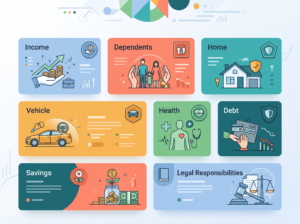
Insurance needs often change after major life events.
Review your coverage when you:
- Get married
- Have a child
- Buy a home
- Take on a large loan
- Change jobs
- Start a business
- Become self-employed
- Move to another area
- Buy a new vehicle
- Experience a major income change
- Receive an inheritance
- Separate from a partner
- Retire
A person with no dependents may need a different level of life insurance from someone whose family depends on their income. A renter may need different property coverage from a homeowner. A person working in a physically demanding job may evaluate disability risk differently from someone working in an office. Your coverage should reflect your current responsibilities, not an outdated version of your life.
How Much Home or Renters Insurance Do You Need?
Home-related coverage may include protection for:
- The building
- Personal belongings
- Temporary living expenses
- Personal liability
- Other structures
- Certain natural disasters or risks
Homeowners should distinguish between:
- The market value of the property
- The cost to rebuild the structure
- The value of personal belongings
- The amount of liability protection
- Any mortgage or lender requirements
The cost to rebuild may not equal the property’s sale price. Construction materials, labor, local conditions, and building standards can affect the estimate.
Renters generally do not insure the building itself. They may consider coverage for:
- Furniture
- Clothing
- Electronics
- Appliances they own
- Personal belongings
- Liability
- Temporary living arrangements
Create a home inventory with photographs, receipts, and approximate values. Without a record, it may be difficult to show what was lost after a major event. Check exclusions carefully. Flood, earthquake, storm, or other risks may require separate coverage depending on the location and policy.
How Much Auto Insurance Do You Need?
Auto insurance decisions may involve:
- Liability coverage
- Collision coverage
- Comprehensive coverage
- Uninsured or underinsured driver protection
- Medical or personal injury protection
- Roadside assistance
- Rental reimbursement
Required coverage varies by location.
Liability protection is important because an accident can create costs beyond damage to your own vehicle. Consider the financial consequences if you were responsible for:
- Vehicle damage
- Medical treatment
- Lost income
- Legal expenses
- Property damage
Collision and comprehensive coverage may be more valuable for a newer or financed vehicle. A lender may require certain coverage until the loan is paid. For an older vehicle with a low market value, compare the annual premium and deductible with the amount the insurer might pay after a covered loss. Do not cancel coverage without confirming legal requirements, lender rules, and the financial risk you would be accepting.
How Much Life Insurance Do You Need?
Life insurance is usually most relevant when another person depends on your income, unpaid care, or financial support.
Consider:
- Income replacement
- Mortgage or rent
- Debts
- Childcare
- Education costs
- Funeral expenses
- Existing savings
- Employer benefits
- Other assets
- The surviving person’s income
A simple starting framework is:
Financial needs after death − existing resources = approximate coverage gap
This is not a complete calculation, but it helps identify the purpose of coverage.
Life insurance needs may change when:
- Children become financially independent
- A mortgage is paid down
- Savings increase
- A partner’s income changes
- You leave employment
- Family responsibilities change
Do not assume employer-provided coverage is enough without checking the amount, eligibility, and what happens if you leave the job.
How Much Disability Insurance Do You Need?
Disability coverage is intended to help replace income when illness or injury prevents you from working, depending on the policy terms.
Consider:
- Monthly essential expenses
- Existing emergency savings
- Employer benefits
- Government programs
- Waiting period
- Benefit duration
- Definition of disability
- Exclusions
- Inflation protection
- Whether benefits are taxable
The most important question may be:
How long could my household continue if my income stopped?
A person with substantial savings and other income may have more flexibility than someone whose household depends entirely on one paycheck.
Read the definition carefully. Some policies pay only when you cannot perform any work, while others may use a broader definition related to your own occupation.
How Much Health Insurance Do You Need?
Health coverage is highly dependent on your country, employment, public programs, and available policies.
When comparing options, review:
- Monthly premium
- Deductible
- Copayments
- Coinsurance
- Out-of-pocket maximum
- Covered providers
- Prescription coverage
- Exclusions
- Waiting periods
- Specialist access
- Emergency treatment rules
A lower premium may come with higher out-of-pocket costs. A higher premium may provide more predictable expenses, but only if the coverage is suitable.
Look at the total possible annual cost, not just the monthly price.
Understand Deductibles and Out-of-Pocket Costs

A deductible is the amount you may need to pay before the insurer contributes to certain covered costs.
A premium is the amount paid to maintain the policy.
A policy may also involve:
- Copayments
- Coinsurance
- Limits
- Exclusions
- Excess payments
- Service fees
- Waiting periods
A lower premium may come with a higher deductible. A higher premium may reduce the amount you pay after a claim.
When choosing a deductible, consider:
- Emergency savings
- Income stability
- Claim likelihood
- The value of the insured item
- Whether a large unexpected payment would create debt
Never choose a deductible you could not reasonably pay if a covered event occurred.
For a fuller explanation, see how insurance deductibles work.
Avoid Overlapping or Unnecessary Coverage
Review whether you already have protection through:
- An employer
- A spouse or partner
- A bank account
- A credit card
- A professional association
- A government program
- Another insurance policy
- A landlord or building policy
Overlapping coverage can cause confusion and unnecessary cost.
However, do not cancel a policy simply because another source appears to provide similar protection. Compare:
- Coverage limits
- Exclusions
- Beneficiaries
- Deductibles
- Claim procedures
- Policy duration
- Eligibility requirements
Two policies may look similar but protect against different risks.
Review Insurance Costs Without Cutting Important Protection
To reduce insurance costs responsibly:
- Compare quotes from reputable providers
- Ask about available discounts
- Review deductibles
- Remove coverage you genuinely no longer need
- Update vehicle mileage or household information
- Bundle policies only after comparing total cost
- Improve home or vehicle safety where worthwhile
- Avoid small claims when the cost is close to the deductible, if appropriate
- Review policies after major life changes
Do not understate information to receive a lower premium. Incorrect information can create claim problems later.
The cheapest policy is not automatically the best policy. Consider reliability, claims service, exclusions, and financial strength where relevant.
A Realistic Insurance Review Example
Suppose a household has:
- Home insurance
- Auto insurance
- Health coverage
- Employer-provided life insurance
- A small emergency fund
- One income earner and one dependent child
During a review, the household discovers:
- The auto policy still lists old mileage
- The home inventory is outdated
- Employer life insurance would not cover several months of expenses
- The deductible is higher than the household could pay
- A subscription-based protection plan overlaps with existing coverage
The household updates the mileage, creates a home inventory, reviews life insurance needs, and chooses a deductible that better matches its savings.
The result is not simply about paying less. It is about making sure the coverage matches the household’s actual risks and ability to manage a claim.
Common Insurance Mistakes
- Choosing coverage based only on the monthly price: Premiums are only one part of the cost.
- Using an unaffordable deductible: A policy is less useful if you cannot pay the deductible.
- Ignoring exclusions: Uncovered events may create the largest financial losses.
- Failing to update beneficiaries: Life changes can make old beneficiary choices unsuitable.
- Assuming employer coverage is permanent: Coverage may end when employment ends.
- Underestimating belongings: Without an inventory, it may be difficult to document losses.
- Buying duplicate coverage: Review policies and benefits for overlap.
- Canceling important protection to save money: Short-term savings can create a larger future risk.
- Not reviewing after major life changes: Income, dependents, assets, and debts can change insurance needs.
- Trusting guaranteed claims: No insurer or policy can eliminate every financial risk.
Frequently Asked Questions
How do I know how much insurance I need?
List the losses that could seriously damage your finances, identify what you already own or receive through benefits, and compare the remaining financial gap with available coverage.
Should I choose a high or low deductible?
Consider your emergency savings, income stability, likely claim costs, and the premium difference. Never choose a deductible you could not reasonably pay.
Is employer-provided life insurance enough?
It may or may not be. Check the amount, eligibility, beneficiaries, exclusions, and whether coverage continues after you leave the employer.
Do renters need insurance?
Renters generally do not insure the building, but they may consider protection for belongings, liability, and temporary living costs. Requirements vary by lease and location.
Is the cheapest insurance policy the best?
Not necessarily. Compare limits, exclusions, deductibles, claims service, fees, and the total cost before choosing.
How often should I review insurance?
Review policies at least when you move, marry, have a child, buy property, change jobs, take on debt, start a business, or experience a major income change.
Can I reduce coverage to save money?
Sometimes, but review legal requirements, lender conditions, exclusions, and the financial risk before making changes. Avoid reducing essential protection without understanding the consequences.
Should I bundle insurance policies?
Bundling may reduce costs or simplify management, but compare the total price and coverage with separate policies. A discount is not useful if the overall policy is unsuitable.
Key Takeaways
- The right amount of insurance depends on your risks, responsibilities, assets, income, and ability to handle losses.
- Focus on events that could seriously damage your financial stability.
- Review coverage after major life changes.
- Consider premiums, deductibles, limits, exclusions, and out-of-pocket costs together.
- Create an inventory of your belongings and keep important policy documents organized.
- Check whether employer benefits or other policies already provide coverage.
- Do not cancel important protection only to reduce monthly expenses.
- Choose deductibles that match your emergency savings.
- Compare policies based on value and protection, not price alone.
- Readers can continue with signs you may be underinsured, how insurance deductibles work, and why insurance premiums increase.
- Households saving for future goals can also review goal-based saving.
Insurance cannot remove every financial risk, but it can make serious losses easier to manage. The goal is not to buy the most coverage possible or the cheapest policy available. It is to understand what you could realistically afford to lose and choose protection that addresses the largest gaps.
Review your coverage periodically, ask clear questions, and read the policy terms before assuming a risk is covered.
This article is for informational purposes only and is not financial advice.
Leave a Reply
You must be logged in to post a comment.