
Investing is often explained as a numbers problem. Learn the basics, choose suitable investments, manage risk, and stay patient. But many investment mistakes are not caused by a lack of intelligence. They happen because people are influenced by fear, excitement, social pressure, overconfidence, recent news, and the desire to avoid regret.
Someone may understand that investing is long term but still sell after a sharp decline. Another person may know that diversification matters but put too much money into one exciting idea. A careful saver may avoid investing entirely because temporary losses feel unbearable.
This is the psychology of investing: The study of how emotions, assumptions, habits, and mental shortcuts affect financial decisions.
This guide explains why smart people make poor investment decisions, how emotional investing develops, which mental biases are most common, and what systems may help you make calmer choices. This is general education, not personalized investment advice. Investments involve risk, and values can fall as well as rise.
Why Investing Is So Emotional
Investing combines uncertainty, delayed rewards, and incomplete information.
You may not know:
- What prices will do tomorrow
- Whether a company will succeed
- How long a downturn will last
- Which news matters
- Whether a decision will look wise later
- How your emotions will respond to losses
This uncertainty creates discomfort. The brain naturally looks for shortcuts that reduce confusion and help you act quickly.
Those shortcuts can be useful in everyday life, but they may create problems in investing.
For example:
- Fear can make a temporary decline feel permanent
- Excitement can make a risky idea feel certain
- Recent news can seem more important than long-term evidence
- Other people’s confidence can feel like proof
- A past success can create overconfidence
The goal is not to eliminate emotion. That is unrealistic. The goal is to understand your emotional patterns well enough to avoid making major decisions during moments of fear or excitement.
The Difference Between Knowledge and Behavior
A person may know the correct investing principle and still struggle to follow it.
They may understand:
- Diversification
- Long-term planning
- Risk
- Compounding
- Market volatility
- The cost of frequent trading
Yet knowledge can disappear when the value of an investment falls sharply.
This happens because financial losses feel personal. A falling balance may trigger thoughts such as:
- I made a terrible mistake
- I need to stop the loss now
- I should have waited
- Everyone else is selling
- I cannot afford to lose more
The emotional urge is to act immediately. But acting during panic may create a permanent result from a temporary situation.
A written plan can help protect decisions from short-term emotional reactions.
Common Psychological Biases in Investing
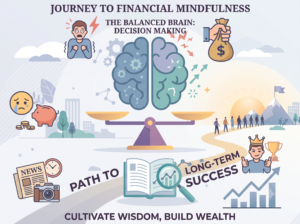
Loss Aversion
Loss aversion means losses may feel more painful than equal gains feel rewarding.
A person may tolerate a small gain calmly but feel intense pressure after a similar loss. This can lead to selling too quickly, avoiding reasonable risk, or making emotional decisions.
Our article on loss aversion in investing explores this bias in more detail.
Herd Mentality
Herd mentality occurs when people follow a group because they believe the group must know something important.
It can appear during:
- Market rallies
- Popular investment trends
- Online discussions
- Sudden sell-offs
- Celebrity recommendations
- Speculative bubbles
Following the crowd may feel safer than making an independent decision, but popularity does not guarantee suitability.
See herd mentality in investing for a deeper explanation.
Recency Bias
Recency bias causes people to give too much importance to recent events.
After a market rises for a long time, someone may assume the rise will continue. After a decline, they may assume losses will continue forever.
Recent information matters, but it should be considered alongside longer-term context.
Overconfidence
Overconfidence can lead investors to believe they can:
- Predict short-term movements
- Choose winners consistently
- Time the market
- Understand information better than others
- Recover from losses quickly
Confidence can be useful, but excessive confidence may lead to concentrated positions, frequent trading, or ignoring risk.
Confirmation Bias
Confirmation bias occurs when you search for information that supports what you already believe while ignoring evidence that challenges it.
An investor who loves a particular company may read only positive articles and dismiss warnings. A person who dislikes investing may focus only on negative stories.
Look deliberately for evidence that could prove your assumption wrong.
Why Recent Market News Can Influence You
Financial news is designed to attract attention. Headlines often focus on:
- Sharp price movements
- Forecasts
- Political events
- Economic data
- Company announcements
- Market predictions
- Dramatic gains and losses
Frequent exposure can make short-term changes feel more important than they are.
Ask:
- Does this information change my long-term goal?
- Does it affect the investment’s underlying risk?
- Is this a verified fact or a prediction?
- Am I reacting because the headline is dramatic?
- Would I make the same decision without seeing this news?
You do not need to ignore financial information. You need to decide how often to consume it and what role it should play in your decisions.
Understand Your Personal Risk Tolerance
Risk tolerance describes how comfortable you are with uncertainty and possible losses.
Risk capacity is different. It describes how much risk your financial situation can withstand.
You may feel comfortable with risk but lack the income, savings, or time horizon to absorb a major decline.
Consider:
- When you need the money
- Whether you have emergency savings
- Income stability
- Debt obligations
- Dependents
- Other assets
- Your ability to stay invested during a downturn
- Your emotional response to losses
A portfolio that looks reasonable on paper may be unsuitable if its changes cause you to panic and sell at the worst possible moment.
Risk should be evaluated both mathematically and emotionally.
Create an Investment Decision Process
A written decision process can reduce impulsive choices.
Before making an investment decision, ask:
- What is my goal?
- When will I need the money?
- What could go wrong?
- How much could I lose?
- What information supports this decision?
- What information challenges it?
- Is the investment diversified?
- Am I acting because of fear or excitement?
- Does this decision fit my broader financial plan?
- What would make me change my mind?
Writing the answers can expose emotional reasoning.
For example, “everyone online is buying it” is a description of popularity, not evidence that the investment is suitable for your goals.
Separate Short-Term Money From Long-Term Money
Money needed soon should generally not be exposed to the same uncertainty as money intended for a distant goal.
Short-term money may include:
- Rent
- Tuition
- Emergency expenses
- A planned move
- A vehicle purchase
- Medical costs
- Annual bills
Long-term money may have more time to experience market changes, but the appropriate approach depends on your circumstances and local financial options.
Do not invest emergency savings simply because you want a higher return. A sudden loss may force you to sell at an unfavorable time.
A clear separation between short-term and long-term money can reduce emotional pressure.
Use Automation Carefully

Automation may help remove some emotional decisions from the process.
Examples include:
- Regular contributions
- Automatic transfers
- Scheduled portfolio reviews
- Predefined allocation rules
- Rebalancing reminders where appropriate
Automation does not make an investment risk-free. It also should not be set up and forgotten permanently.
Review whether:
- Contributions still fit your budget
- The goal remains appropriate
- Risk matches your timeline
- Fees are understood
- The account remains suitable
- Your circumstances have changed
Automation is most useful when it supports a thoughtful plan rather than replacing one.
Avoid Checking Investments Constantly
Frequent checking can increase emotional reactions.
If you check daily, normal price changes may feel like urgent events. You may become more likely to:
- Trade frequently
- Sell after a decline
- Buy after a rise
- Change plans repeatedly
- Consume more alarming news
- Focus on short-term outcomes
Choose a review schedule that matches your goals. Long-term goals may not require daily attention.
A review can focus on:
- Progress toward the goal
- Contributions
- Fees
- Diversification
- Changes in personal circumstances
- Whether the original plan still fits
The goal is to stay informed without allowing every price movement to control your mood.
A Realistic Example of Emotional Investing
Imagine an investor who puts $10,000 into a diversified long-term investment plan. After several months, the value falls to $8,800 during a market decline.
The investor feels panic and considers selling.
Before acting, they review:
- The original time horizon
- The purpose of the money
- Emergency savings
- The level of risk chosen
- Whether the underlying plan changed
- Whether the decline affects their actual goal
If the money is still intended for a distant goal and the original assumptions remain valid, the investor may decide not to make an immediate emotional change. If circumstances have changed or the risk was too high, they may seek qualified advice and reconsider the plan.
The correct decision cannot be determined from the price movement alone. The lesson is that a temporary decline should be evaluated in context rather than treated as an automatic command to act.
Common Investing Psychology Mistakes
- Buying because everyone else is buying: Popularity is not proof of suitability.
- Selling immediately during fear: A temporary decline can become a permanent loss if you sell without a plan.
- Checking prices constantly: Frequent monitoring can increase emotional trading.
- Assuming past performance will continue: Recent success is not a guarantee.
- Ignoring risk capacity: Comfort with risk is not the same as ability to absorb losses.
- Concentrating too heavily: One investment can create excessive dependence on a single outcome.
- Following online predictions: Predictions are uncertain and may be influenced by incentives.
- Searching only for confirming evidence: Review information that challenges your assumptions.
- Investing emergency money: Short-term needs require accessibility and stability.
- Changing plans repeatedly: A plan should be reviewed thoughtfully, not rewritten after every headline.
Frequently Asked Questions
What is the psychology of investing?
The psychology of investing examines how emotions, beliefs, habits, and mental shortcuts affect investment decisions.
Why do smart people make bad investment decisions?
Intelligence does not eliminate fear, overconfidence, social pressure, loss aversion, or confirmation bias. Investing involves uncertainty, which can make anyone vulnerable to emotional decisions.
How can I stop emotional investing?
Create a written process, use a suitable time horizon, automate regular contributions where appropriate, limit unnecessary checking, diversify carefully, and review decisions before acting.
Should I sell when the market falls?
There is no universal answer. Consider your goal, timeline, risk, financial situation, and whether the original investment assumptions changed. Avoid making major decisions based only on fear.
Is automation enough to prevent investing mistakes?
Automation can reduce some emotional decisions, but you still need to review your goals, risk, fees, and personal circumstances periodically.
How often should I check investments?
The appropriate schedule depends on the goal and strategy. Long-term investors may not need to react to daily changes. Focus on meaningful reviews rather than constant monitoring.
What is the biggest emotional investing mistake?
There is no single mistake for everyone, but buying from excitement and selling from fear are common patterns that can damage long-term results.
Should beginners invest in popular trends?
Popularity does not guarantee suitability, diversification, or long-term value. Understand the risks and never invest money you cannot afford to lose.
Key Takeaways
- Investing decisions are influenced by fear, excitement, social pressure, recent news, and mental shortcuts.
- Common biases include loss aversion, herd mentality, recency bias, overconfidence, and confirmation bias.
- Intelligence and financial knowledge do not automatically prevent emotional decisions.
- Separate short-term needs from long-term investment money.
- Evaluate both risk tolerance and risk capacity.
- Use a written decision process before buying or selling.
- Automation may reduce emotional choices but does not remove investment risk.
- Avoid checking prices constantly or reacting to every headline.
- Review whether your original goal, timeline, and financial circumstances have changed.
- Readers can continue with loss aversion in investing, herd mentality in investing, and recency bias in investing.
- Those looking for a more structured process can read how to remove emotion from investing.
Investing is not only about finding information. It is also about understanding how you respond when information is uncertain and prices move against you.
A thoughtful process can help you pause before fear or excitement takes control. Define your goals, understand your risk, limit unnecessary noise, and review your decisions with enough patience to distinguish temporary movement from a meaningful change in your financial situation.
This article is for informational purposes only and is not investment advice.
Leave a Reply
You must be logged in to post a comment.